How to Become an E-Commerce Model in the UK — TDA London
Blog · Booked
How to Become an E-Commerce Model in the UK — TDA London
This is The Diversity Agency, a London agency founded in 2016 with a working E-commerce board — models who shoot for online stores most weeks, booked by the same desk writing this. E-commerce modelling rarely gets talked about, because it isn't glamorous and nobody's putting it on a showreel. But it is the single largest and steadiest source of paid model work in the UK, and it has been for years. This is the honest guide to how to become an e-commerce model: what the work actually is, what clients look for, what it pays, and how a board like ours turns applications into bookings.
We're not dressing this up. E-commerce modelling is fast, repetitive and unglamorous, and it's also the closest thing to reliable income this industry has. For a large share of TDA's roster, it isn't the filler between the exciting jobs — it's the main job, and the exciting jobs are the bonus.
What is e-commerce modelling, actually?
E-commerce modelling means shooting product for online stores — clothing, footwear, accessories, beauty, homeware — so a retailer can put it up for sale with real photography instead of a flat product shot. It's a subset of the wider commercial modelling world, but it runs on its own logic, its own pace, and its own pay structure, so it's worth separating out.
Inside e-commerce, there are a few distinct shoot types, and most working e-comm models do all of them across a career:
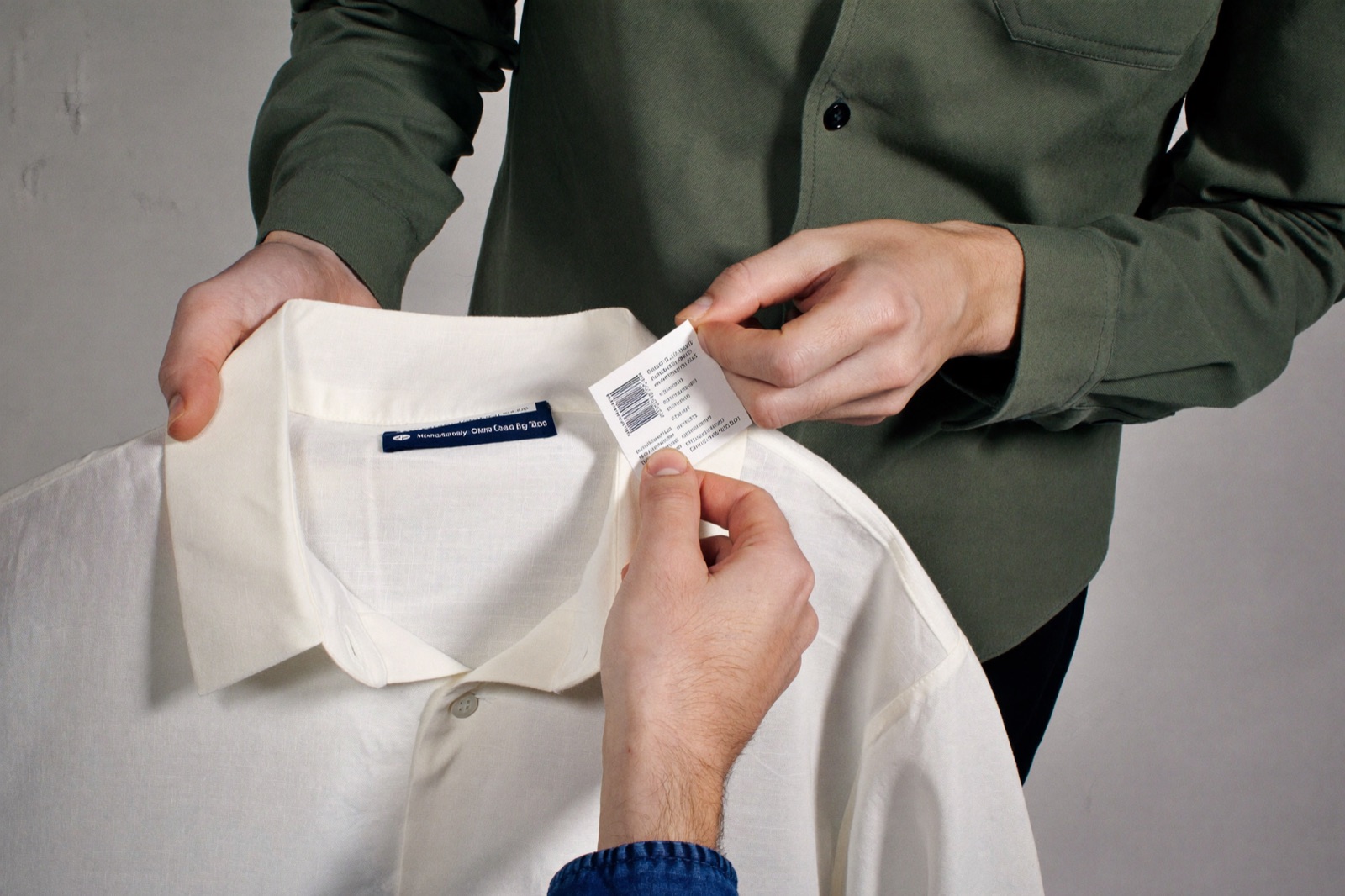
- Ghost / on-model. "Ghost" or invisible-mannequin work photographs the garment on a mannequin and removes the mannequin in post, so the item floats on a white background. "On-model" is the same brief shot on a real person instead — the fit, drape and proportion a mannequin can't show.
- Catalogue. The classic e-comm day: a plain background, consistent lighting, dozens or hundreds of individual product looks shot back-to-back for a retailer's website grid.
- Flat-lay-adjacent work. Not literally flat-lay — that's usually shot without a model — but the model-worn equivalent: close, clean, product-first shots of jewellery worn on the hand, bags worn on the shoulder, shoes on the foot, styled the same way a flat-lay would be, just live.
- Marketplace listings. Shoots built specifically for third-party platforms — Amazon, ASOS Marketplace, eBay, department-store concessions — each with their own strict image specifications that the model and photographer have to work inside.
None of this is fashion photography in the editorial sense. Nobody is chasing a mood or a story. The brief is always the same: show the garment clearly, show it fitting properly, and get through the day's rail.
Why e-commerce is the biggest, steadiest source of paid work in the UK
Every high-street and online retailer in the UK needs new product photography, constantly, because stock changes every season and often every week. That single fact is what makes e-commerce modelling different from every other category of work an agency books: it doesn't depend on a campaign being greenlit, a brand having a big year, or a casting director liking your tape. It depends on retailers restocking, which they always do.
That's why an ecommerce modelling career, unlike almost anything else on our books, can genuinely be built into something close to regular income. A model who works well, arrives on time and takes direction gets rebooked by the same client's studio again and again — sometimes weekly, sometimes for the same brand for years. Editorial and campaign work is occasional by nature. E-commerce is the opposite: it's the volume business of the modelling industry, and volume means more working days per model than any other category we book.
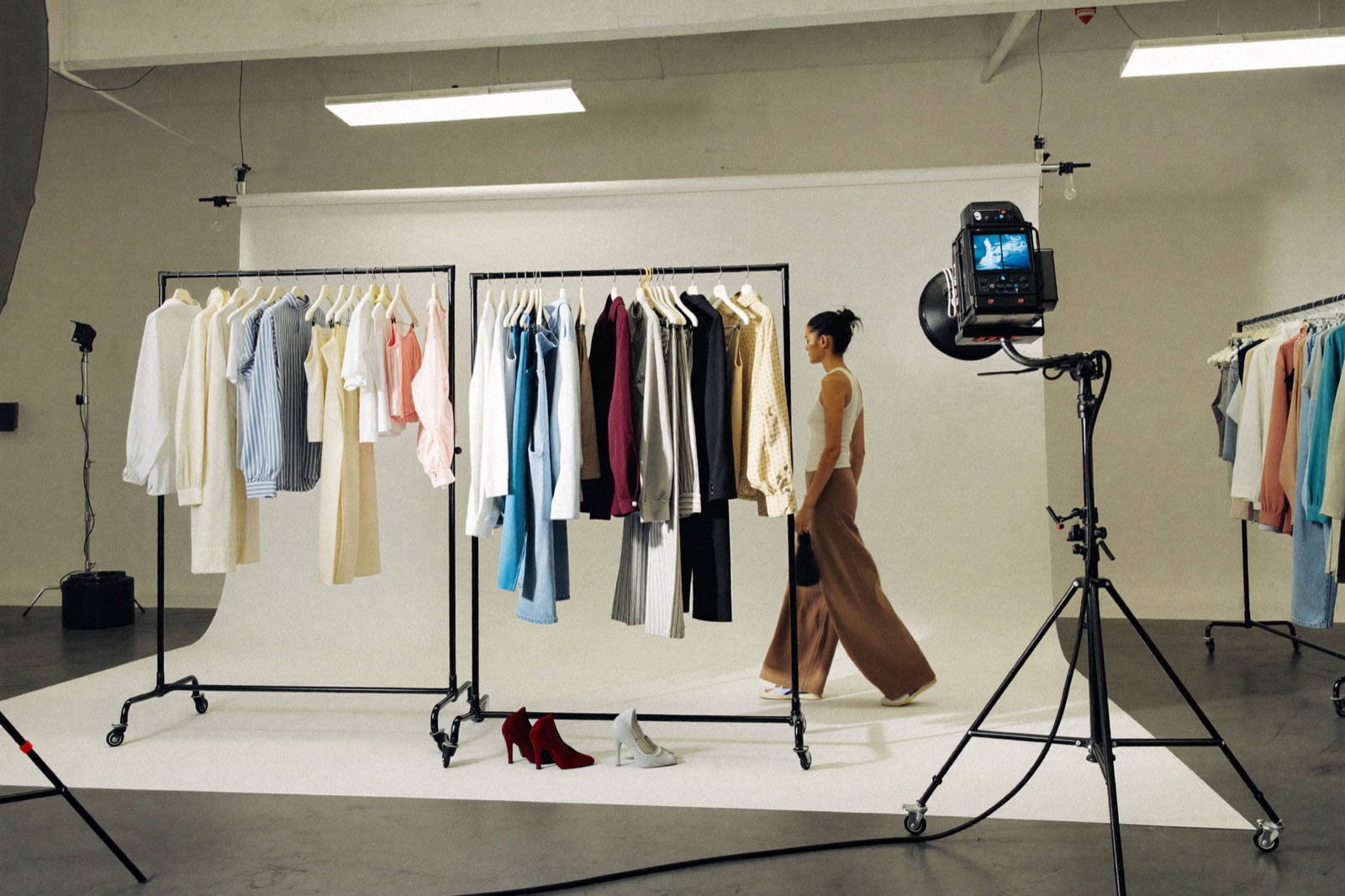
Clients booking e-commerce aren't looking for a face that tells a story. They're looking for someone reliable who can wear forty looks in a day and make every one of them look like the website photo. That's a completely different skill from campaign modelling, and it's the one that actually pays the bills.
What e-comm clients actually look for
Casting for e-commerce modelling has almost nothing in common with casting for a campaign, and applicants who don't know that waste a lot of time applying the wrong way. This is what genuinely gets booked:
- Fit, above everything. The garment has to sit the way it sits on the retailer's size chart. A model whose measurements match the sample size gets booked repeatedly by the same client, because their clothes will always fit that model the same way.
- Consistency. Studios shoot the same model across multiple sessions specifically so their product photography looks uniform. A model whose body, hair and general look stay stable session to session is worth more to a client than one who changes dramatically.
- Speed through the rail. A full e-commerce day can mean anywhere from thirty to well over a hundred individual looks. Clients need a model who can change fast, hit a mark, take three or four frames and move on — no lingering, no second-guessing the pose.
- Taking direction without discussion. There's no time on an e-comm set for a conversation about motivation. A photographer calls "hands on hips, chin down, big smile" and the model does it immediately. That responsiveness is trained, and it's the single biggest differentiator between a model who gets rebooked and one who doesn't.
- Standard sample sizes — but the ranges are genuinely widening. Most mainstream e-comm work is still shot on standard sample sizes, because that's what the majority of garments are cut to. But as retailers diversify their customer base, demand for petite, plus-size and older models shooting their own dedicated ranges has grown into a real, separate booking category rather than a token gesture. We cover the petite side of that in our guide to how to become a petite model in the UK — petite ranges are shot on petite bodies specifically because the fit has to be real.
What isn't on that list matters too: a dramatic look, high-fashion proportions, or prior editorial credits. None of those move the needle for an e-comm booker. What moves the needle is whether the last studio that used this model would happily use them again next week.
How much do e-commerce models earn in the UK?
E-commerce pay is usually structured around half-day and full-day catalogue rates rather than the single "shoot fee plus usage" structure you'd see on a campaign. Typical UK e-commerce day rates run roughly £150–£400 for a half-day and £250–£600 for a full day, depending on the client, the model's experience and how many looks are on the rail — though established models on regular retainer-style bookings with larger retailers can earn more.
The usage side works differently too. A lot of e-commerce contracts are web-only buyouts — the images exist purely to sell the product on the retailer's own site and app, with no separate print or out-of-home usage fee attached, because the images were never intended to run anywhere else. That keeps individual day rates lower than a campaign shoot with a big usage fee behind it, but it's offset by volume and frequency: an e-comm model working two or three days a week for regular clients earns more across a year than most models who wait for occasional bigger jobs. Agency commission on all of it, as with every booking we make, is the standard 20% — it pays for negotiating the rate, chasing the studio's invoice and keeping the relationship live so the same client rebooks next month. For the wider picture across every category of UK modelling work, our guide to what UK models actually get paid sets e-comm rates against campaign, beauty and editorial rates side by side.
The honest caveat we give every applicant applies here too: none of this is guaranteed, and it builds slowly. A first e-comm booking doesn't mean weekly work starts the following month. It means a studio now knows what you're like on set, and if you were good, they call again.
What a day on an e-commerce shoot is actually like
This is the part most modelling guides skip, because it isn't flattering, and it's exactly why we're including it. A typical e-comm day starts early, runs to a strict schedule, and looks nothing like the mood-board version of modelling most applicants imagine.
- It's fast. A studio might shoot a new look every three to five minutes across an eight-hour day. There's no time between looks to relax into a scene.
- It's repetitive. The same handful of poses — front, three-quarter, back, a close detail shot — repeated across dozens of near-identical garments in slightly different colourways.
- It's unglamorous. Changing rooms are usually a curtained corner of the studio, not a dressing room. Make-up is minimal and functional, done once at the start of the day and touched up between looks, not restyled.
- It's reliable. This is the trade-off, and it's a genuine one. The days are long and the work isn't creative, but the booking exists because the retailer needs the photos regardless of the season, the economy, or whether a brand's latest campaign performed well. That's a kind of security very little else in modelling offers.
Models who dislike this pattern tend to self-select out after one or two bookings, and that's fine — it isn't for everyone. Models who treat it as a professional discipline, arrive early, stay easy to work with and don't complain about the pace, end up as the names studios call first.
How to become an e-commerce model: the actual steps
There's nothing to buy and nothing to build before you apply. Here's the process, start to finish:
- Take honest digitals. Six to eight simple phone photos in daylight against a plain wall: face front-on, face profile, a genuine smile, full length front and side. Fitted plain clothing, no filters, no heavy make-up.
- Record accurate measurements. Height, bust, waist, hips, dress and shoe size, exactly as they are. E-comm bookings live or die on fit, so an inflated or rounded measurement doesn't just risk one booking — it risks the client never using you again.
- Apply to an agency with a genuine e-commerce board. A lot of agencies treat e-comm as an afterthought behind editorial and campaign work. Look for one that actively books it and shows real client work on the board, and apply through the official application route rather than a third party. Our guide to applying to a UK model agency covers the whole process; our own form is the TDA apply page.
- Expect a straight answer, never a bill. A legitimate agency tells you yes, no, or invites you in — for free. If anyone asks for a registration fee or a paid "starter portfolio" before they'll consider you, that's not an agency. Our guide to spotting a modelling scam in the UK lists the exact patterns to watch for.
- Show up reliably to the first few bookings. This is where an e-commerce career is actually made. The first booking gets you in the room; being easy, fast and punctual on that booking is what gets you called back for the next one, and the one after that.
The mistakes applicants actually make
The same handful of errors turn up in e-comm applications week after week, and every one of them is easy to avoid once you know what a booker is actually checking for:
- Treating it as a lesser category. Some applicants only apply for editorial or campaign boards and skip e-comm entirely, assuming it's beneath them or won't lead anywhere. It's usually the fastest route to steady paid bookings on our books, and plenty of models who started there have gone on to campaign and beauty work off the back of a strong studio reputation.
- Sending over-styled photos. A heavily filtered or professionally shot application photo is the opposite of what an e-comm booker needs to see, because fit is the entire brief. A plain, honest phone photo tells a booker far more than a retouched one.
- Rounding measurements. The single most common self-sabotage on any application, and it matters more here than almost anywhere else, because the garment either fits on the day or it doesn't.
- Underestimating the pace. Applicants sometimes arrive at their first e-comm booking expecting a campaign-style day and are thrown by the speed. Knowing what to expect beforehand — read the section above again if you need to — is the difference between a smooth first booking and an awkward one.
- Paying anyone anything before a booking exists. Money on a legitimate booking flows from the client, to the agency, to the model. It never runs the other way at the application stage, and anyone asking it to is not who they claim to be.
TDA's e-commerce board — how it works
Our E-commerce board exists because the demand is constant, not seasonal, and it's treated as its own working roster rather than a side note to the fashion board. When a retailer or studio comes to us with a shoot, we're matching against measurements and fit first, availability and reliability second, and general look a distant third — which is the opposite order to how a campaign casting usually runs.
Models on the board get put forward for the specific bookings their measurements genuinely suit, not every casting that comes in, because a mismatch wastes the client's day and damages the relationship for every model we might put forward after. We negotiate the day rate and usage terms on every booking, chase the studio's invoice, and keep the relationship with that client live so the same booker comes back to us next season rather than shopping around.
If you're already signed and this is a category you haven't been active on, it's worth a conversation with your booker about whether your measurements and availability fit the pattern above — it's frequently the fastest way to add regular paid days to a book that's otherwise reliant on occasional bigger jobs.
E-commerce modelling FAQs
What does e-commerce modelling actually involve?
Shooting clothing, footwear, accessories or other products for online retail — ghost/on-model work, catalogue shoots, close product-focused shots and marketplace listings. The brief is always to show the product clearly and correctly, not to create a mood or a story.
Do you need modelling experience to start with e-commerce?
No. E-commerce is one of the most accessible starting points in the industry, because clients are casting for fit, reliability and pace rather than a portfolio of previous editorial work. Many working models do their first paid booking on an e-comm set.
How much do e-commerce models get paid per day in the UK?
Typical UK e-commerce day rates run roughly £150–£400 for a half-day and £250–£600 for a full day, usually as a flat catalogue rate rather than a shoot fee plus separate usage, since most e-comm images are used only on the retailer's own site.
What sizes and measurements do e-commerce models need?
Most mainstream e-comm bookings shoot on standard retail sample sizes, but dedicated petite, plus-size and older ranges are a genuine and growing part of the market, each needing models whose measurements match that specific range's sizing.
Is e-commerce modelling suitable as a full-time income?
It's the closest thing to steady income the industry offers, because retailers need new product photography continuously rather than occasionally. It still isn't guaranteed or immediate — it's built through repeat bookings with the same studios and clients over time.
What's the difference between ghost mannequin and on-model e-commerce shoots?
Ghost mannequin shots photograph the garment on a mannequin and remove it digitally, producing a floating-product image. On-model shots put the same garment on a real person, which is the only way to show how it actually fits and moves.
Can plus-size or petite models get booked for e-commerce work?
Yes, and demand has grown as retailers expand their size ranges — those ranges have to be photographed on the bodies they're actually cut for, or the customer sees an inaccurate fit. See our guide to becoming a petite model in the UK for more on that specific market.
Do e-commerce models need a professional portfolio to apply?
No. Honest phone digitals in daylight are the correct application format for any legitimate agency, including for e-commerce work. A paid "starter portfolio" before you've even been considered is a warning sign, not a requirement.
What should I wear to an e-commerce modelling casting or shoot?
For an application, plain fitted clothing that shows your real proportions. For a booked shoot, the studio provides the product — you'll usually be asked to arrive in simple, easy-to-remove basics such as a fitted vest and leggings underneath, so changes between looks are fast.
Ready to apply?
E-commerce modelling is fast, repetitive, and unglamorous, and it's also the most reliable paid work the UK modelling industry has to offer — because retailers need new product photography every week, regardless of what else is happening in fashion or advertising. The clients care about fit, consistency and pace, not a look that photographs like a magazine cover, and that opens the door to models who'd never get near a high-fashion casting.
The Diversity Agency has booked e-commerce work since 2016, and our E-commerce board exists because the bookings are constant. Have a look at the board, then send your digitals through the apply page. If you'd rather ask something first, get in touch — you'll get the same straight answers we've given here.


