How to Become a Model in the UK — TDA London
Blog · Booked
How to Become a Model in the UK — TDA London
The Diversity Agency, London. Founded 2016. An independent UK model agency built on commercial and diverse casting across every board. This is the honest, from-the-booker's-desk guide to becoming a model in the UK in 2026.

Becoming a model in the UK starts with honest digitals and the right agency.
The short version
- The honest version of how to become a model UK in 2026: pick a lane (commercial, e-commerce, beauty, curve, modest, classic, parts, family), take four plain digitals on your phone, apply direct to real UK agencies, never pay an upfront fee.
- You do not need to be 5'9 size 6 to get signed. Most paid UK work is commercial. At TDA we sign across every height, size, age, gender, faith and ethnicity, because that is what UK brands now book.
- How to get into modelling with no experience: free agency application + four phone digitals + one or two test shoots once you're signed. No portfolio needed upfront. No paid course needed ever.
- Realistic UK day rates: e-commerce £150 to £500, commercial and lifestyle £400 to £2,000+, plus usage on bigger campaigns. Agency commission is roughly 20 to 40 percent.
- Real route to TDA: apply with your name, height, location, four digitals, your Instagram. We read every application and reply within a week.
If you've typed "how to become a model UK" into Google and ended up on a page selling you a £400 course, close the tab. This guide is the booker's-desk version. I founded The Diversity Agency in 2016, originally as BAME Models, because the UK industry was failing whole sections of the country. We now represent around 330 models across every board, and we read every application that comes in. What follows is how the route in actually works, what UK agencies look at, and what to ignore.
How do you become a model in the UK in 2026?
You become a model UK in 2026 by applying directly to a real UK agency with four phone digitals, getting signed (or invited to the development board), and then working your way up through test shoots and your first paid jobs. There is no audition, no exam, no course. The whole entry process is free.
The route has four parts. One, decide what kind of modelling fits you (we'll go through the lanes below). Two, take four basic phone shots: front, side, full body front, full body back. Three, apply direct, online, to real UK agencies that represent your kind of face. Four, if signed, do your first test shoot, then say yes to early castings while you build a book.
That is the whole shape. The skill is in the detail of each step, and in not getting talked into anything that costs money up-front.
How do you become a model in the UK with no experience?
You become a model UK with no experience by applying with four plain phone digitals and nothing else. Real agencies do not want a portfolio. They want to see your face, your proportions, and your skin in daylight. Experience is built after you're signed, not before.
This is the single biggest misunderstanding in the question. People assume "no experience" is a problem to fix before applying. It isn't. The National Careers Service lists "applying directly" to an agency as the standard route in. You don't need a course, a school, or a paid portfolio package.
What we look at on a "no experience" application:
- Are the photos clear, in daylight, against a plain wall?
- Are you in fitted clothes (vest, jeans, leggings), no filters, no make-up, hair off the face?
- Do you live in the UK (or near a major shoot city) and have right to work?
- Is there an Instagram handle so we can see you move, talk, and exist as a person?
If those four boxes tick, you're in the pile we look at. The rest happens after we sign you.
What do UK agencies actually look for?
We look at four things, in roughly this order: face on camera, body proportions for the brief, professional indicators, and personality. The mythology of "the right look" is real, but the right look in 2026 is broader than people think.
Face on camera means the way your features photograph, not how attractive you are walking down a high street. Some of the most-booked faces in the UK are striking on camera and average in person. Body proportions for the brief means we cast different briefs against different size and height bands; we don't have a single standard.
Professional indicators are the boring stuff that decides whether we open the email. Right to work in the UK (the right to work check is non-negotiable), a working phone, an active Instagram, the ability to reply to a casting in two hours. Personality is what we test on a model call: can you hold a conversation with a stylist, take direction, stay off your phone on set.
The brief-by-brief reality. A high-street e-commerce brand books a different body to a campaign for a private bank, which books a different face to a bridal designer, which books a different age to a supermarket Christmas ad. There is no one "model body" any more. There are dozens of useful bodies, all earning.

UK modelling is open to every age and background — families, kids, commercial and fashion.
The kinds of UK modelling work that actually pay
UK modelling is not one job. It is roughly nine kinds of job, all paid differently. The route in is the same, but knowing which lane fits you is how you stop applying to the wrong rosters.
E-commerce. The volume work. High-street and online retailers shooting hundreds of products a day. Day rates £150 to £500. You'll do beauty, womenswear, menswear, kidswear, sportswear. This is where most signed UK models earn the bulk of their living.
Commercial and lifestyle. Adverts, banking, telecoms, supermarkets, healthcare, government information films, holiday brochures. Day rates start at £400 and can run to £2,000+ for the day, with usage fees layered on top for bigger campaigns. Heights, ages and sizes are wide open here.
Beauty. Skincare, hair, dental, fragrance. Skin condition, teeth, hair texture and eyes are scrutinised closely. Diverse skin tones are heavily in demand.
Editorial. Magazines and online publications. Day rates are low (sometimes a flat fee, sometimes nothing but tearsheets), but the imagery builds your book.
Runway and catwalk. London Fashion Week, designer runways, and the trade-show circuit. Specific heights remain: women 5'9 to 5'11, men 6'0 plus. Commercial runways at trade shows are more flexible.
Fit modelling. Standard-sized models hired by brands to fit-test sample garments. Hourly work, reliable, repeat bookings.
Parts modelling. Hands, feet, hair, lips, eyes, legs. Whole careers exist here. We run dedicated hand and foot boards because the work is consistent.
Family, kids and classic. Family casting (couples + kids), child performers (which requires a child performance licence; more on that below), and 40-plus "classic" models who book heavily for travel, banking, healthcare and supermarket campaigns.
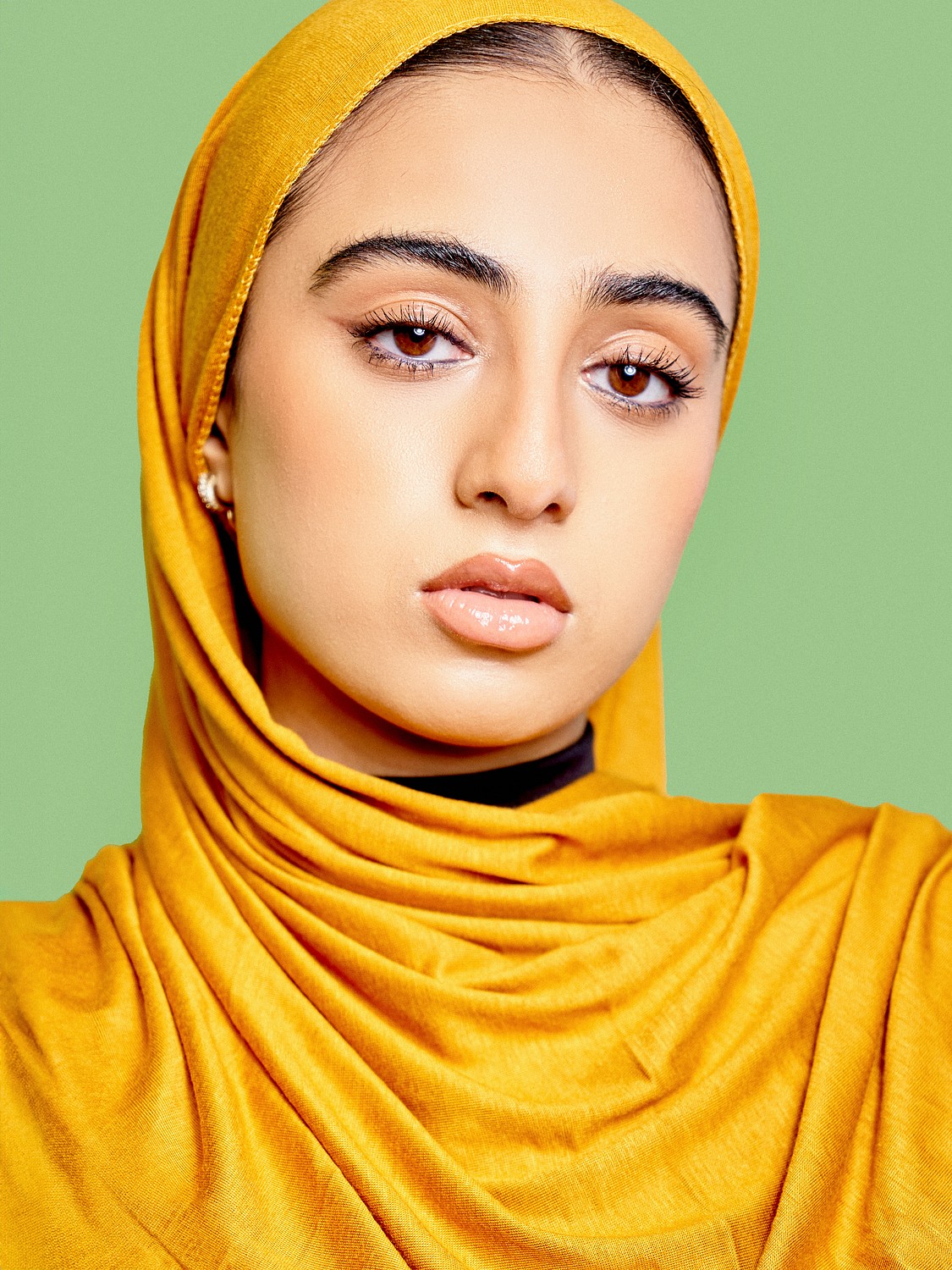
Modest and faith-aware modelling. Hijab, abaya, modest swim and modest occasionwear. A growing, under-represented lane that books across both fashion and commercial briefs. Our Modest board sits inside this.
Pick the two or three lanes that fit you. Apply to agencies that have a board for each. Don't apply to a high-fashion-only roster if you're 5'5 and curve. Apply where the board already exists.
How do you become a model in the UK if you're not 5'9, size 6?
You become a model UK at any height, size, age, faith or background by applying to commercial-led and diversity-led agencies, not high-fashion houses. The "5'9 size 6" rule applied to high-end runway in the 1990s. It does not apply to the bulk of paid UK work in 2026.
TDA represents around 330 models. The roster includes:
- Women and men of every height from petite to tall.
- Curve and plus from size 14 to size 30+. The Curve board is one of our most-booked.
- Modest and hijabi faces booked across high-street, bridal and beauty.
- Classic and mature models (40 to 70+) booked for banking, travel, healthcare, supermarket and government work. Our Classic models page lists the current board.
- Black, South Asian, East Asian, MENA, LATAM and mixed-heritage faces. We rank #1 in the UK for "south asian modeling agency" because the demand is real and the supply was thin.
- Non-binary and gender-fluid talent.
- Hand and foot specialists. Parts modelling is a quiet, well-paid lane.
- Family casting: real couples, real parents, real kids.
The pattern: if you've been told "you don't fit" by a fashion-only house, that says nothing about whether you can work as a model in the UK. It says you were applying to the wrong roster. Pick a board that already exists for someone like you and apply there.
How do you start modelling in the UK from scratch?
Start by writing a one-paragraph email to two or three real UK agencies with four phone digitals attached, then wait. That is the entire first step.
The four-digital set:
- Front head-and-shoulders. Plain wall, daylight, hair off the face, no make-up, no filter, looking straight at the lens.
- Side profile. Same setup, turn 90 degrees.
- Full body, front. Fitted vest and jeans (or fitted leggings). Arms relaxed, feet hip-width apart.
- Full body, back. Same outfit, turn around.
That's it. Phone camera is fine. Natural daylight by a window is best. No tripod, no studio, no MUA, no edit.
What to include in the email or application form:
- Name, age, height in cm and ft/in, location (city), Instagram handle.
- Right to work in the UK (yes/no).
- Which board you think you fit (Mainboard, Curve, Modest, Classic, Hands, Feet, Family).
- The four digitals.
That is the whole application. If you are sending more than 100 words of cover note, you are sending too much. We're looking at the images, not the prose.
A note on under-16s. If you're applying on behalf of a child, child performers in the UK need a child performance licence from the local council before any paid work. That sits with the parent, not the agency.

A clean portfolio shot is what bookers and casting directors actually look at.
Taking the four digitals UK agencies ask for
The four digitals are the only thing we look at on a first application. They take 15 minutes and cost nothing. The mistakes are always the same, so I'll list them.
What works:
- Daylight from a window or outdoors on an overcast day. Overcast is best, it flattens shadow.
- Plain wall. Cream, white, light grey. No patterned wallpaper, no kitchen, no bathroom.
- Fitted clothes that show your real shape. Vest top and slim jeans is the safest combo for women; fitted T-shirt and jeans for men.
- Hair off the face for at least one shot.
- Phone camera held at chest height, slightly above for the headshot, straight on for the body shots.
What kills the application:
- Hard direct sunlight cutting half your face into shadow.
- Heavy make-up, contour, lashes, false brows. We can't see your face.
- Filters, Snapchat edits, Photoshop, Facetune. We will spot it.
- Baggy clothing. We cannot read your proportions.
- Selfies in a mirror. Get a friend or a tripod.
- Group shots, holiday photos, festival photos. Wrong format.
If the lighting is rough, do them again the next morning by a different window. The whole set takes 15 minutes to retake.
How much do UK models earn?
Working UK models earn somewhere between £15,000 and £80,000+ a year, with a long tail in both directions. The headline numbers are day rates; the actual income depends on how many days you book.
A rough current snapshot of UK day rates:
- E-commerce, catalogue: £150 to £500 per day.
- Editorial: £100 to £300, sometimes tearsheets only.
- Commercial stills and lifestyle: £400 to £2,000+ per day.
- Beauty: £500 to £2,500+ per day for campaigns.
- TV commercials: £500 to £2,500 base, plus usage running into five figures for a long run.
- Runway: £200 to £1,500 per show.
- Fit modelling: £30 to £80 per hour.
The National Careers Service lists typical earnings on the lower end of these bands; in practice, commercial and TV usage push the upper end up further than the government data shows.
Then there are the deductions. Agency commission is typically 20 percent of the model fee, plus a separate 20 percent from the client side on some bookings. Usage fees on campaigns can multiply the day rate two to ten times. You are paid as self-employed, so you'll need to register with HMRC and put aside roughly 20 to 30 percent for tax and National Insurance. The Equity union covers performers and is worth joining for contract help.
How do you avoid modelling scams in the UK?
You avoid modelling scams by following one rule: money flows from client to agency to model, never the other way round. If anyone asks you to pay upfront, walk away.
The common UK scams:
- "Sign-up fee" or "registration fee" of £100 to £500. Real agencies do not charge this. We do not, and neither does any reputable UK agency.
- "Mandatory portfolio shoot" that you pay for in advance, often £400 to £1,500, run by a photographer the agency conveniently recommends. This is the most common one.
- "Modelling school" or "course" you need to complete before being signed. UK agencies do not require this.
- Premium-rate phone numbers, "scout" approaches in shopping centres that funnel you into a paid evaluation evening.
- Random Instagram DMs offering a "campaign" but asking for your bank details, address, or a "deposit" first.
The smell test. Real agencies make money when you book paid jobs. That's the whole business model. If a company has revenue before you ever work, the model is not you.
Test shoots after signing are different. A test shoot organised by your agency with a real photographer, often free to you or low-cost, is how you build your book. The money is being invested in the image, not extracted from you.
What year one as a signed UK model actually looks like
Year one is mostly onboarding, then early castings, then the first paid jobs. It is slow at the start by design. Almost nobody earns full-time money from modelling in their first six months.
Months 1 to 3. Onboarding. We rebuild your digitals, run your first test shoot, audit your Instagram, set up your model card, brief you on rates, usage, invoicing and tax. You start going to castings.
Months 3 to 6. First paid bookings. Mostly e-commerce and lifestyle. You learn how a set actually runs, how to take direction, how to ask the right questions about call time and wardrobe.
Months 6 to 12. Consistency. Strongest faces start getting requested by clients directly. Your card is updated with real tearsheets. You're starting to earn properly.
If you're on a development board in year one, that is not a rejection. It is a signing route for a younger or earlier-stage face who needs another six to twelve months of growth before a full mainboard push. Most agencies, including TDA, take development models seriously and move them up when ready.
How do you apply to The Diversity Agency?
You apply to TDA directly through the application form at apply. It's free, it takes ten minutes, and a real person reads every submission. We aim to reply within one week.
What we want in the form:
- Name, age, height, dress/jeans size, location, Instagram.
- Right to work in the UK.
- Four digitals (front, side, full front, full back). Phone camera is fine.
- Which board you think you'd fit (Mainboard, Curve, Modest, Classic, Hands, Feet, Family). If you're not sure, leave it blank, we'll place you.
What we don't want:
- A long cover letter.
- Professional portfolio shots (we want raw digitals, not retouched studio images).
- Group shots, holiday pictures, edited selfies.
- A fee. We do not charge to apply, sign, or represent.
If you fit a current gap on the roster, you'll get an invitation to a model call. If you fit the broader board but not a current gap, you may be invited to the development board. If we can't place you right now, we'll say so directly, with a reason.
You can also browse the current rosters first at our faces to see whether your kind of face is already represented (a good sign) or absent (sometimes an even better one).
Frequently asked
Can I become a model in the UK at 30, 40, or 50? Yes. Commercial and classic work is heavily age-diverse. Our Classic board books regularly across banking, travel, healthcare, supermarket and government briefs.
Can I become a model in the UK if I'm 5'4? Yes, for commercial, beauty, e-commerce and parts work. High-fashion runway will be closed; the rest of the industry will not.
Can I become a model in the UK as a hijabi or modest dresser? Yes, and demand is rising fast. Apply to agencies with a modest-specific board.
How long does it take to hear back from a UK agency? A week is reasonable. If you've heard nothing in three weeks, take it as a soft no and try the next agency on your list.
Do I need an agent to model in the UK? You can freelance, but for paid commercial, beauty and TV work, an agency unlocks rates, contracts, usage protection and client relationships you cannot replicate alone.
Do I need to pay tax on modelling income? Yes. You are self-employed. Register with HMRC, keep simple records, and put aside roughly 20 to 30 percent of your gross for tax and National Insurance.
Is modelling a full-time job in year one? No. Treat it as part-time alongside another income for the first 12 months. The full-time decision sits in year two or three, once the bookings are consistent.
If you take one thing from this: the route into UK modelling is free, direct, and short. Four digitals, a real agency, no upfront fee. Everything else is detail.
Related reading: How much do UK models get paid? · How to apply to a UK model agency · What modelling agencies look for.
You might like
View all →