What Do Modelling Agencies Look For? (UK) — TDA London
Blog · Booked
What Do Modelling Agencies Look For? (UK) — TDA London
The Diversity Agency, London. Founded 2016. An independent UK model agency built on commercial and diverse casting across every board. This is a TDA booker's honest answer on what UK modelling agencies actually look for.

Good skin, a strong face and the right attitude — what UK agencies actually look for.
The short version
- What modelling agencies look for, in plain English: castability, professionalism, range, and skin that holds up to close-up light. Looks matter, but not in the way most people think.
- UK agencies cast across every height, size, age, ethnicity and faith. There is no single "model body". The brief sets the rules, and the brief changes every week.
- How to get scouted in 2026 is less about being spotted in a coffee shop and more about applying directly with three honest digitals: headshot, mid-length, full-length, no makeup, daylight, plain background.
- Real model agency requirements in the UK are board-specific. Main, Classic, Curve, Modest, Family, Hands and Feet each have their own brief and their own ranges.
- TDA is a free-to-apply commercial London agency. Any agency that asks for a fee upfront is not one to sign with. That is the hard rule that holds across the whole UK industry.
I'm Marcus Flemmings, founder of The Diversity Agency. I sit at the booker's desk for one of the busiest commercial agencies in London. People ask me what modelling agencies look for almost every day, on email, on Instagram, in DMs, at events. The answer is more specific than "tall and skinny" and less brutal than the internet thinks. Below is the honest version, written for someone who actually wants to apply and stay applied.
What do modelling agencies look for?
UK modelling agencies look for castable models who fit a real client brief, behave professionally on set, and photograph well across changes of light, angle and styling. That is the whole answer. Everything else, from height ranges to skin tone to social media size, is a downstream filter.
A booker like me is not standing at the door imagining a runway. I am sitting at a desk looking at the inbound brief for the week. A bank wants a smiling 60-year-old South Asian man for a homepage. A high street retailer wants a UK 18 curve model for a campaign. A beauty brand wants a tight close-up on hands holding a serum bottle. We cast from the boards we already have. If you fit a brief that lands repeatedly, you book. If you don't, you don't.
So when I open an application, my brain is asking three questions. Can I picture this person on a real client call sheet from the last 30 days? Is the digital honest enough that what I see is what the client gets? And is this someone a producer will want back?
What do model agencies look for, and is it different?
People search "what do model agencies look for" and "what do modelling agencies look for" interchangeably, and the answer is the same. Whether it is spelled "model agency" or "modelling agency", the UK commercial industry runs on the same checklist: castability, professionalism, range, skin and reliability.
A handful of US-style scouting agencies run differently. They sign young, push hard into editorial markets, and treat models as develop-from-zero projects. UK commercial agencies including TDA are closer to the booking side of the business. We represent working talent across every category and book them for advertising, retail, beauty, TV, public information and bridal.
If you are reading this in the UK and trying to figure out what your local agency wants, this article is the right answer. The vocabulary changes by country. The job does not.
What are the model agency requirements in the UK?
UK model agency requirements vary by board, but the headline rules across the industry are short. Be honest in your digitals. Be 16 or over for adult boards. Have skin and a face that hold up under close light. Behave well on set. Apply through the agency's official channel. No fees, no auditions in unmarked offices, no "you must buy a portfolio first".
Beyond those baselines, board-specific requirements at TDA look roughly like this.
| Board | Typical UK range |
|---|---|
| Women's Main | 5'7" to 6'0", UK 6 to 12 |
| Men's Main | 6'0" to 6'3", suit 38 to 40R |
| Curve | UK 14+, every height |
| Classic | 35+ years, presence over stats |
| Modest | every height, every size, modest styling |
| Family and Kids | 6 to 16 with parent consent |
| Hands | unblemished skin, slender fingers |
| Feet | UK shoe size 6 to 8 typically |
| Development / New Faces | 16 to 20 |
These are commercial ranges, not high-fashion ones. They reflect what UK clients actually book.
If you are outside one of those rough ranges, that does not automatically mean no. It means your application gets weighed against where the diary has space. We sign petite specialists at 5'2", mature talent in their 70s, plus-size models up to UK 30, and hand specialists who never show their face. The board you fit shifts the brief, and the brief shifts the answer.
The truth about height, age and size
The most common myth is that you must be 5'9" and a size 6 to model in the UK. That has not been true for a decade in commercial work. The audience for advertising is the actual UK population, not the runway model. The casting briefs follow.
In a typical month at TDA, the bookings span:
- Height from 5'1" (petite catalogue work) to 6'2" (sportswear).
- Age from 6 (family campaigns) to 78 (banking and pharmacy).
- Size from UK 6 (e-commerce) to UK 28 (curve campaigns).
- Skin tones from the palest fair to the deepest Black.
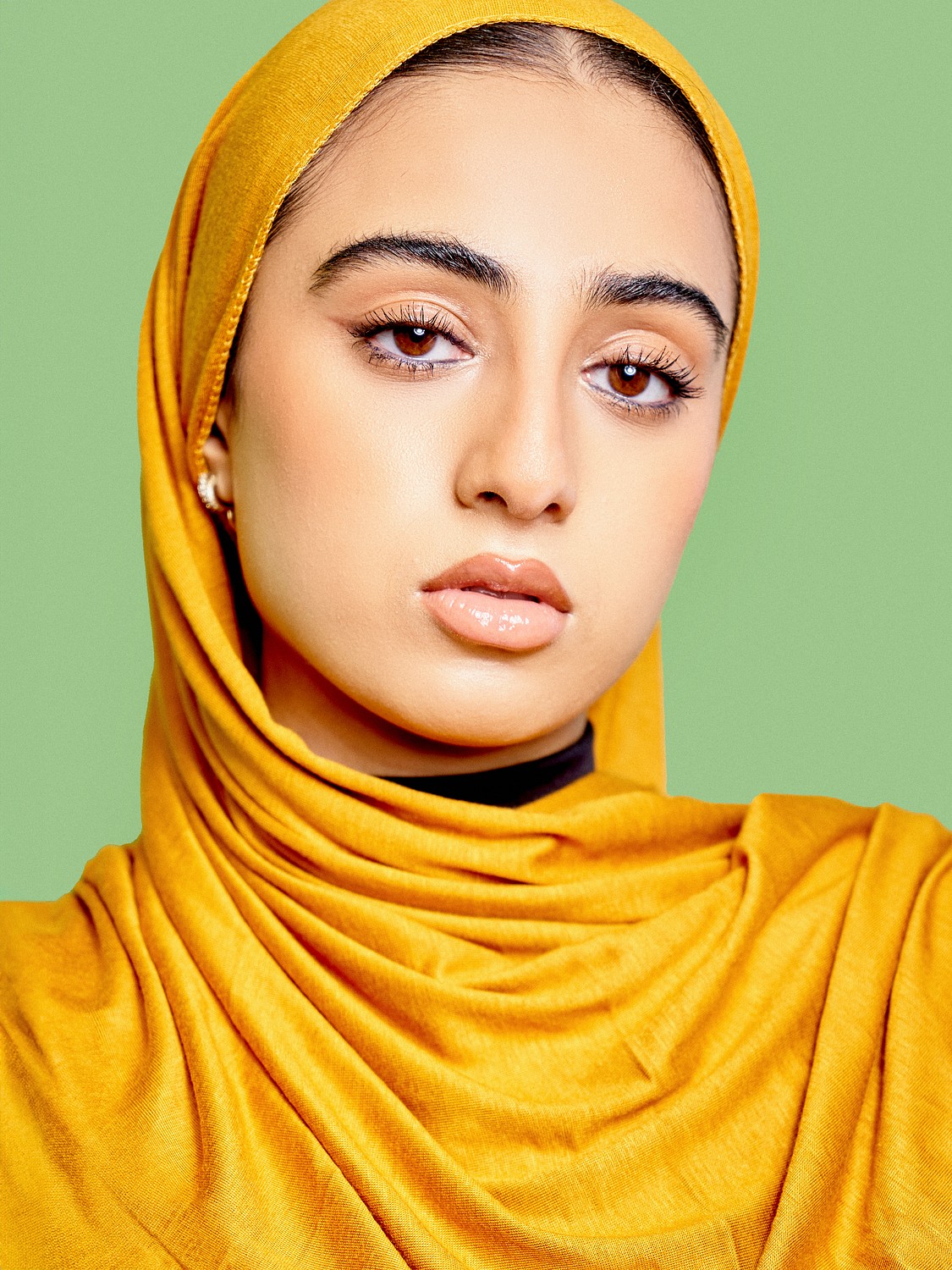
- Faith and styling from hijabi modest commerce to swimwear.
The skill is being right for the brief, not being inside a single narrow window. The agencies that built their boards around look-the-same rosters have spent the last five years catching up to the briefs that no longer match.
There is one practical caveat. If you are very close to a category boundary (5'8" trying to apply to a Main board briefed at 5'9"+), the call is about whether your face, range and styling are interesting enough to justify the centimetre. Often the answer is yes. Sometimes another board fits better.
What about your face?
Modelling agencies look for a face that holds structure under photographic light, reads on a small screen, and changes register cleanly between expressions. That does not mean conventionally pretty. It means photographable.
What I actually look for on a digital:
- A jawline and cheekbone that don't disappear when the light shifts.
- Eyes that hold the camera, not eyes that hide from it.
- A face that can carry both warm and neutral without effort, because half the briefs that come in want one and the other half want the other.
- Symmetry that is enough, not perfect. Perfect symmetry photographs flat.
I have signed models the high street would never call beautiful and watched them out-earn the conventionally pretty applicants by four times over. The reason is castability. A face that reads as believable across a wide range of products beats a face that only photographs as one thing.
Skin, hair and body honesty
Skin matters more than people think and more than agencies usually say out loud. Roughly half of the rejections on beauty briefs in our diary come back to skin texture or tone evenness, not to the model's face shape or styling. Cosmetics and skincare clients commission close-up photography that magnifies anything imperfect about the surface.
That is not the same as needing flawless skin. It means:
- Even tone (post-retouch baseline still matters).
- No active breakouts on shoot day (manageable, not glamorous).
- A skincare routine you actually keep.
- Honest digitals that show your real skin, not a Snapchat filter version.
Hair is treated as part of styling, not as a fixed asset. Natural Black hair, Sikh turbans, hijabs, dyed colours, shaved sides, long hair, no hair. All of it is castable, and our roster carries all of it because UK brands now brief specifically for that range.
Body honesty is the same principle as skin honesty. Send the mid-length and full-length digital you actually have on a Tuesday morning, not the version you took on a holiday three years ago. Bookers spot the gap, and clients spot it faster.

Presence and castability matter more than one fixed look.
What do agencies want from your personality on set?
Modelling agencies want models who are easy to work with, on time, calm under pressure, and quick to take direction. That is the personality brief in one line, and it outranks almost every look factor over a career.
What this means day to day:
- You arrive when the call sheet says, not five minutes later.
- You eat before set, not on set.
- You ask one good question, not five vague ones.
- You take a styling note from the brand client without sulking.
- You can hold a position for the photographer without checking your phone every two minutes.
I have watched applicants with extraordinary faces fall out of our diary because they were difficult, and I have watched applicants with quietly strong digitals turn into the names producers ask for by name because they were easy. The booking decision over time is made on who the brand wants back. Behaviour is the lever you control directly. Use it.

Agencies sign across gender, age and background — men included.
How do you get scouted by a UK modelling agency?
How to get scouted by a UK modelling agency in 2026 is less about being spotted on the high street and more about putting your application directly into the inboxes of the agencies you respect. Street scouting still happens, mostly around schools, festivals and universities, but it accounts for a small fraction of our intake.
The reliable route is shorter than the myth suggests:
- Take three honest digitals on a phone in daylight. Headshot from the shoulders up, mid-length from the hips up, full-length head to toe. No makeup, hair off the face, plain wall, neutral clothing.
- Make a shortlist of three to six UK agencies whose roster already includes people who look like you. If a board has nobody in your category, the application is unlikely to land however strong the digitals are.
- Use each agency's official apply form. Not Instagram DMs, not WhatsApp, not paid model scouts. The application form exists for a reason.
- Send the digitals, your real height and clothing size, your location, your age, and a sentence about your day job. Not your modelling goals. Not your inspirations. Bookers want operational information.
- Wait. Bookers go through inbound in batches. A week is normal. Two months is normal. Silence is normal too. A no does not mean you are not right for the work, it usually means the board already has people in your category.
If you want to skip the search, you can apply to TDA in about five minutes. We respond inside seven days. Free, every time.
What is overrated when applying?
The factors most aspiring models worry about are not the factors I actually weigh.
Followers. A booker reads social media count as a soft tiebreaker, not a hiring factor. A six-figure Instagram presence does not get you cast on a banking campaign that needs a believable office worker. The casting director cares whether you read as the customer.
Pre-built portfolios. Spending money on a modelling portfolio before you have an agency is wasted money. We ask for honest digitals because we need to see what you actually look like, not what a photographer with a fan and a strobe made you look like.
Industry connections. Agencies care that you can be on set and behave. They do not care which photographer's assistant you know.
Distinctive looks. Editorial agencies prize the unusual. Commercial agencies prize the recognisable. If everyone tells you you should model because you look different, that is a useful editorial-track signal, not a commercial one.
Age windows. "You are too old to start at 25" is a myth taken from runway fashion. We sign models at every age. The most under-supplied category in our diary is over-50. Senior commercial talent is short across the UK industry, not long.
How do you apply to a modelling agency?
You apply to a UK modelling agency directly through the agency's apply form, with three honest digitals, your real stats, and the minimum amount of friction. That is the whole answer, and the same answer holds across every reputable UK agency.
The basics:
- Use the official form. Every UK agency that is worth applying to has one. If you cannot find it, the agency is not taking inbound.
- Apply to several at once. Boards run on category balance, not talent ranking. Two of three agencies might already be full in your slot.
- Do not pay anyone. Representation is free. The agency makes its money on commission from your bookings. No test shoot fee, no registration fee, no portfolio package.
- Skip the fluff. Do not write a cover letter about your passion for modelling. Tell the booker the operational facts.
- Wait properly. Do not follow up in three days. A short note after a month is fine.
For TDA, the route in is our apply page, and we send a decision inside a week. You can browse the main board first to see whether your category is there, or skip straight to applying. Either is fine.
We sit at 71-75 Shelton Street, Covent Garden, London WC2H 9JQ, the central London base for one of the busiest commercial diaries in the UK. The roster covers around 330 models across women, men, Classic, Curve, Modest, Hands, Feet, Family and Development. The clients on file include Charlotte Tilbury, Nike, The Body Shop, Coca-Cola, the LTA, and the public bodies that brief through frameworks like the Cabinet Office.
For broader context on how UK performer fees and usage are structured, the Equity union publishes negotiated guidance. Commercial modelling sits alongside that framework rather than inside it.
A day on the booker's desk
The morning starts with the inbox. A casting from a TV ad agency wanting a believable 40-year-old British East Asian mother for a campaign. A brief from a high street retailer for an e-commerce day at UK size 14. A beauty client wanting a close-up hand model for a Thursday in Hackney Wick.
I open the boards, eye the digitals against the brief, shortlist 8 to 12 names, send the proposals. If the casting comes back wanting to see more, I dig deeper. If it comes back booking, I confirm rates, usage and call times, then send the call sheet to the model. The day on a booker's desk is not glamorous. It is operational, fast, fiddly, and intensely personal. The names on the boards are people I have signed and watched grow.
That is the desk your application is landing on. It is busy. The fastest way to be remembered is to make my job easy. Clean digitals. Honest stats. The right form. The right agency. Do that, and the door is open.
The honest answer for talent the industry overlooks
The UK modelling industry has spent decades casting from too narrow a window. The work, the audience, the clients and the briefs have moved. The agencies that built rosters around a single body type, a single age window and a single skin tone are catching up to where the casting now is. The agencies that started earlier on the diverse side, including TDA, sit closer to the pace of the briefs.
What modelling agencies look for in 2026 is not the model of 1996. The brief is broader, the work is more representative, and the door is open for talent who was told for years they did not fit. Send the digitals. Apply directly. Stay patient. The booker on the other end is reading.
If you would like a faster route in, the apply page is the fastest one. Free, honest, and read by a person, not a bot. That is the only sentence I can give you with no caveats, and I would give it to my own family.
Related reading: How much do UK models get paid? · How to apply to a UK model agency · What modelling agencies look for.

You might like
View all →