What Happens at a Model Casting (UK Guide)
Blog · Booked
What Happens at a Model Casting (UK Guide)
Your first model casting invitation has landed and you have no idea what to expect. This guide walks you through the whole thing: what a casting actually is, what happens in the room, what to wear, what to bring and how long you will wait to hear back. It is written from the booker's desk at The Diversity Agency (TDA), the London model agency founded in 2016, and it covers in-person castings, self-tapes and the red flags that tell you a casting is not legitimate.
What is a model casting?
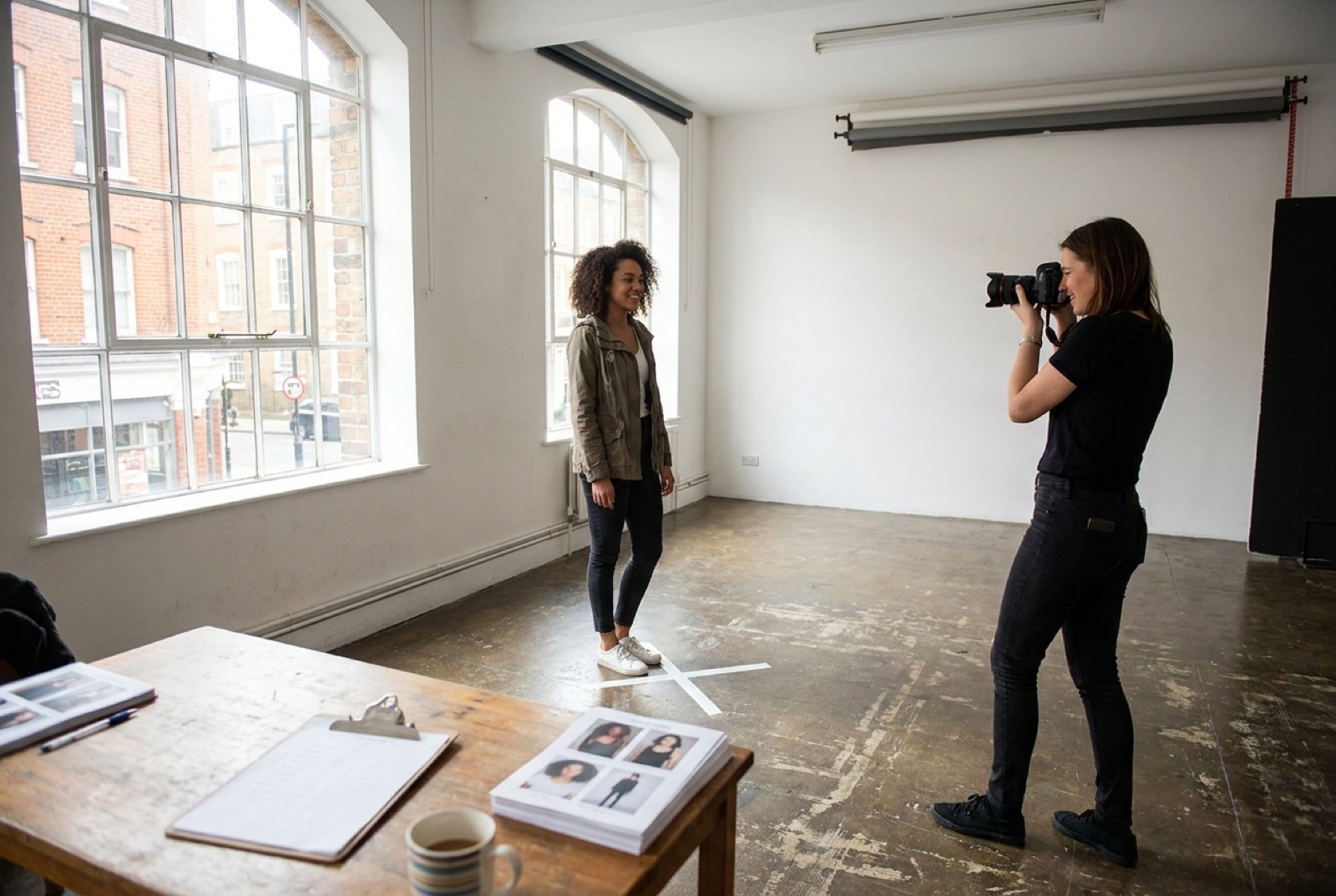
A model casting is a short meeting, usually five to fifteen minutes, where a client or casting director sees you in person to decide whether to book you for a specific job. It is not an interview for representation and it is not a test of your personality. The client already liked your pictures. The casting exists so they can check that you match your portfolio, see how you move, and picture you in their campaign.
Think of it as the middle step in a three-step process. Your agency submits your profile for a brief. The client shortlists a group of models they want to see. The casting is where that shortlist gets narrowed to the one or two faces who get booked.
Most castings in London are held at casting studios, production offices or the client's own space. Rooms full of other models waiting their turn are normal. So is being seen for ninety seconds and sent on your way. Neither of those things means anything went wrong.
You may also hear the phrase "casting call". In the UK the terms are used almost interchangeably. Strictly, a casting call is the announcement (the invitation to attend), while the casting is the appointment itself. An "open call" is different again: anyone can turn up, no agency submission needed. Agency models mostly attend request castings, where the client asked to see you specifically.
How do casting invitations arrive?
If you are signed to an agency, casting invitations come from your booker, not from the client. At TDA that means an email or WhatsApp from the bookings team with the date, time, address, the client or project name, and any notes the casting director sent over. You confirm your availability with us, we confirm your slot with the client, and the appointment goes in the diary.
A typical casting notice includes:
- The client or brand, and sometimes the product
- The casting date, time slot and full address
- The shoot date, so you can flag a clash immediately
- The rate or budget, or at least an indication
- What to wear and what to bring
- Any role notes, for example "must be comfortable on a bike"
Two things matter here. First, reply fast. Casting slots fill in hours, and a slow reply can mean the slot goes to someone else. Second, check the shoot date before you confirm. Attending a casting for a job you cannot actually do wastes everyone's time and dents your reliability with that casting director.
If you are not yet signed, invitations arrive through open calls or direct applications. Be careful with anything that arrives unsolicited through Instagram DMs. Legitimate castings almost always run through agencies or established casting platforms, and the scam warning signs are worth learning before you attend anything you found yourself.
What should you bring to a model casting?
Bring your comp card or portfolio if you have one, a form of ID, the casting details saved offline on your phone, and heels or specific footwear if the brief asked for them. That is genuinely the whole list for most commercial castings. Clients photograph and film you on the day, so the physical portfolio matters less than it did ten years ago, but having one still reads as professional.
A sensible casting bag looks like this:
- Comp cards (ask your agency if you do not have any printed)
- Phone with the address, contact name and your agency's number saved
- Water and a snack, because castings run late and you may queue
- Nude, seam-free underwear in case there is a fitting element
- Heels for fashion and bridal castings; clean trainers for commercial
- A hairbrush and basic touch-up kit
- Measurements written down, in case a form asks and your mind blanks
What not to bring: a full face of heavy make-up (more on that below), an entourage, or printed selfies in place of proper images. If a friend or parent accompanies you for safety, which is completely reasonable, they should wait outside the casting room itself. Under-18s should always be accompanied by a parent or guardian, and any legitimate casting will expect that.
What should you wear to a casting?
Wear simple, well-fitted clothing that shows your shape and lets your face do the work: plain fitted top, well-cut jeans or trousers, clean minimal footwear. The client needs to see you, not your outfit. A casting is not a fashion show, and overdressing is a far more common mistake than underdressing.
The default casting uniform in London looks like this:
- Women: fitted plain top or bodysuit, skinny or straight jeans, minimal heel or clean trainers, hair down or simply tied, minimal make-up
- Men: plain fitted t-shirt, dark jeans or chinos, clean trainers, groomed but natural
- Everyone: no busy prints, no logos, no oversized layers that hide your silhouette
Read the brief before you default to the uniform, though. If the casting notes say "smart casual, corporate feel" or "come in activewear", that instruction beats the standard advice every time. Bridal castings often ask for hair worn up. E-commerce castings usually want you as close to a blank canvas as possible.
On make-up: keep it minimal and skin-first. The casting team wants to see your actual skin, bone structure and colouring, because that is what they are hiring. Heavy contouring, lash extensions and strong brows can make you look unlike your digitals, and looking unlike your pictures is one of the few genuine ways to lose a job in the room.
On hair: arrive with it clean and manageable. If your hair is a signature feature, natural curls, locs, a strong cut, wear it the way it appears in your portfolio. Consistency between your pictures and the person who walks in is what builds trust with casting directors.
What actually happens in the casting room?
In the room you will typically sign in, hand over or show your comp card, have digitals and a short video taken, possibly walk or perform a small direction, and then leave. The whole thing usually takes under fifteen minutes, and the part where anyone is actually looking at you often takes under five. Here is the step-by-step version.
- Arrival and sign-in. You give your name and agency at the front desk or on a sign-in sheet. Arrive ten minutes early, never thirty. Casting studios are small and early arrivals clog the waiting area.
- The wait. There may be a queue of models. Castings run on rough time slots and often drift late. Use the time to switch your phone to silent and re-read the brief.
- The form. Many castings ask you to fill in a card: name, agency, measurements, sizes, and sometimes availability for the shoot dates. This is why you carry your measurements written down.
- Digitals. Someone photographs you against a plain wall: front, profile, sometimes back, sometimes a smile and a neutral. These are working reference shots, not art. Stand naturally, relax your shoulders, follow instructions.
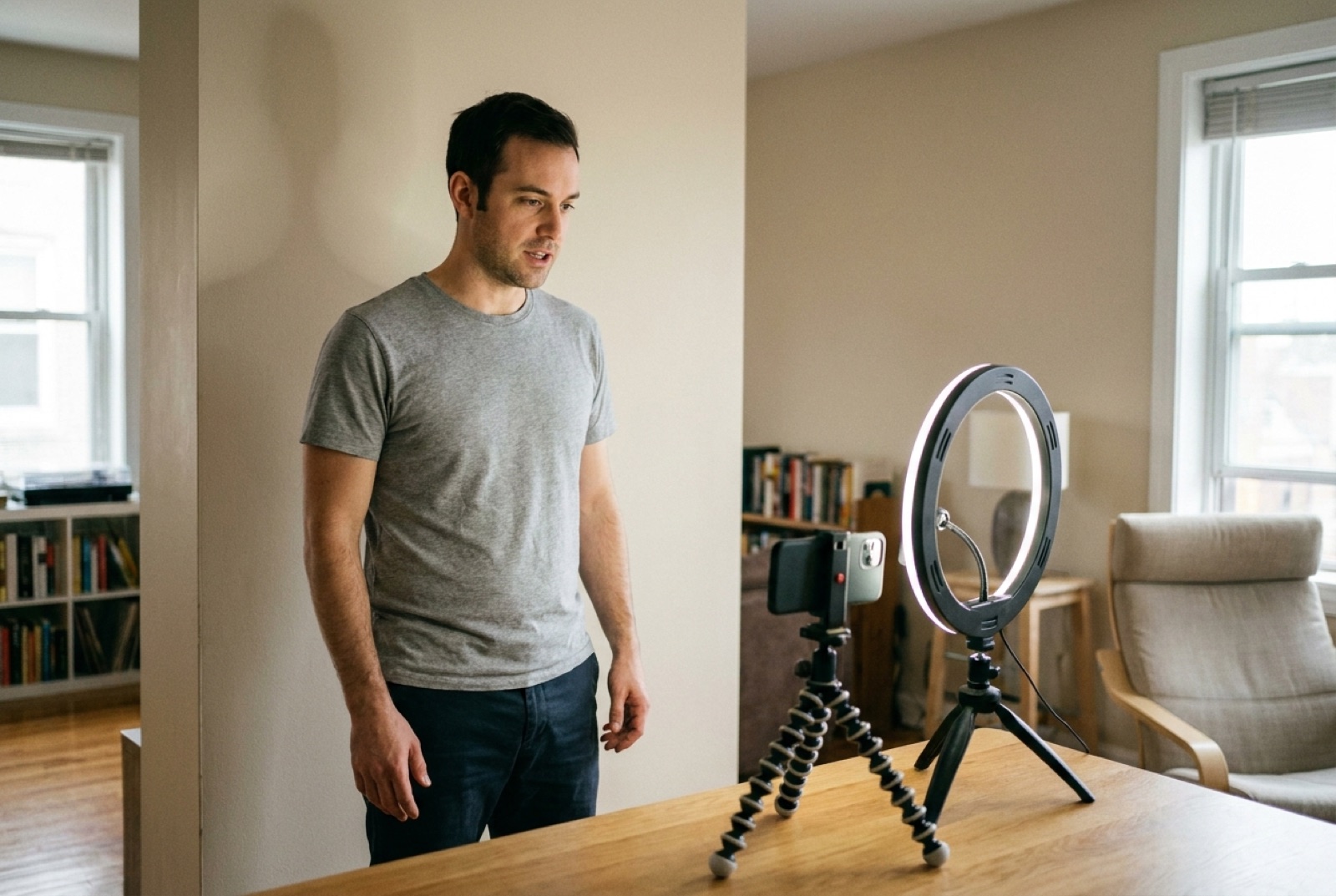
- Video or intro. Increasingly common: a short clip where you state your name and agency to camera, then turn to each side. For commercial and TV work you might be asked to deliver a line or react to a scenario.
- The walk. For fashion and runway castings you will walk a short length of the room, turn and walk back. For commercial castings this often does not happen at all.
- Direction. If the job involves something specific, holding a product, laughing with a partner, riding the bike from the brief, they may test it there and then.
- Fitting check. Some castings include trying on a garment, which is why the seam-free underwear is on the packing list.
- Done. You say thank you and leave. No feedback is given in the room, and asking for it on the spot reads as inexperienced.
Two behaviours separate professionals from first-timers. The first is following direction quickly without over-explaining yourself. If they say "give me a half turn", give them a half turn, not a story. The second is warmth without performance. Casting teams see a hundred faces a day. Being pleasant, punctual and easy is memorable; trying to be unforgettable usually is not.
One more reassurance: nerves are priced in. Casting directors know a new face when they see one, and a slightly nervous model who takes direction well is entirely bookable. What they cannot work with is someone who did not read the brief, turned up late, or looks nothing like their pictures.
Self-tape castings vs in-person: what is the difference?
A self-tape casting asks you to film the casting yourself at home and send it in, instead of attending in person. Since 2020 self-tapes have become the default first round for a large share of UK commercial, TV and e-commerce castings, and plenty of jobs are now booked entirely off tape. If you model in London today, you will do more self-tapes than room castings.
A standard self-tape request specifies:
- What to film: usually an intro (name, agency, location), front and side profiles, hands, and any specific action from the brief
- Framing: typically mid-shot or three-quarter, filmed horizontally or vertically as instructed
- Background: plain and uncluttered, with daylight or even indoor light
- Wardrobe: same rules as an in-person casting, fitted and plain unless told otherwise
- A deadline, which is real and earlier than you think
The practical advantages run both ways. Tapes cost you nothing in travel and let clients see far more faces. The trade-off is that your tape competes in a bigger pool, so the basics matter more: good light facing you, a quiet room, a steady phone propped at chest height, and every single instruction followed exactly. If the brief says "state your height", state your height. Casting teams sort tapes fast, and a tape missing a requested element gets sorted into the wrong pile.
Do not over-produce it. No music, no filters, no editing beyond trimming the ends. A clean tape shot on a phone in daylight beats a stylised one every time, because the client is assessing you, not your editing.
Deadlines deserve their own sentence: agencies usually need your tape a few hours before the client's own deadline so it can be checked and submitted properly, so treat the time your booker gives you as the real one.
How long until you hear back after a casting?
Most casting outcomes arrive within one to seven days, and silence usually means you were not selected this time. There is no rejection email in modelling. Clients confirm the models they want, options and pencils get placed on the shortlist, and everyone else simply hears nothing. This is the single hardest adjustment for new models, so it is worth understanding how the timeline actually works.
After the casting, the typical sequence is:
- Option or pencil. If you are shortlisted, the client asks your agency to "hold" your availability for the shoot dates. This is a strong signal but not a booking.
- Confirmation. The option converts to a confirmed booking, usually one to five days before the shoot. Your agency sends you the call sheet and details.
- Release. If the client goes another way, the option is released. Your booker may or may not be told why.
Should you chase? Chase your agency, never the client. A short message to your booker a week after a casting is fine. Contacting the casting director or client directly is not, and it can genuinely cost you future invitations, because it signals that you go around your agency.
The healthy maths of casting is roughly this: even successful, consistently working commercial models convert only a fraction of their castings into bookings. The client saw forty people for one role. Thirty-nine did not get it, and most of those thirty-nine did nothing wrong. What agencies actually track over time is your casting-to-booking ratio and your reliability, which is why turning up prepared to every casting matters more than the outcome of any single one. If you want a sense of what agencies weigh when they assess new faces, our guide to what agencies look for covers it in detail.
What will a legitimate casting never ask for?
A legitimate casting will never ask you for money, and that single rule filters out most scams on its own. No genuine client or casting director charges you to attend, to be "considered", to register, or to secure a slot. The money in this industry flows one way: from the client, through the agency, to you.
Beyond fees, a real casting will never:
- Ask you to pay for a photoshoot, portfolio or "casting package" as a condition of the job
- Request lingerie or nude images from anyone, and especially not from minors, over DM or email
- Be held in a private home or hotel room with no company name, no agency involvement and no verifiable client
- Pressure you to decide "right now" or lose the opportunity
- Ask for your bank details, passport scans or personal documents before any contract exists
- Refuse to tell your agency the client, the usage or the rate
Practical safety habits worth keeping even for legitimate castings: share the address and time with someone you trust, keep your phone charged, and know that you can leave at any point. If anything in a casting room makes you uncomfortable, a request to change beyond what was briefed, a locked door, a "studio" that is clearly someone's flat, walk out and call your booker from the street. No job is worth overriding that instinct, and any agency worth signing with will back you without hesitation.
If you are freelancing without an agency, the burden of verification sits with you: look up the casting director's previous work, check the production company exists at Companies House, and never attend an address you could not verify. Performers' union Equity publishes ongoing guidance on safe casting practice in the UK, and it is worth a read even for models who never plan to act.

Frequently asked questions
How long does a model casting take?
Plan for thirty to sixty minutes door to door, even though your actual time in front of the panel is usually five to fifteen minutes. Queues are the variable, not the casting itself. Never book anything tight on the other side of a casting slot, because overruns are routine and leaving before you are seen wastes the trip entirely.
Can I bring someone with me to a casting?
Yes, and for under-18s a parent or guardian must attend. For adults, a friend waiting in reception or outside is completely normal and no legitimate casting will object. Your companion should not come into the casting room itself unless you are a minor, in which case the chaperone stays with you throughout.
What if I am running late to a casting?
Call or message your booker immediately, before the slot time, so the agency can warn the casting team. A flagged ten-minute delay is usually absorbed without fuss. An unexplained no-show, on the other hand, is one of the fastest ways to stop being submitted to that casting director at all.
Do I get paid to attend a casting?
No, attending a casting is unpaid, and that is standard across the UK industry. You are paid for the job if you book it. The exception is a paid recall or fitting for some larger productions, which your agency will tell you about explicitly. If someone asks you to pay to attend, that is a scam, not a casting.
What is the difference between a casting and a go-see?
A casting is for a specific job; a go-see is a general introduction to a client or photographer with no particular booking attached. Go-sees are how clients build a mental roster of faces for future work. Treat them with exactly the same preparation, because a good go-see often turns into a request casting months later.
What is a recall casting?
A recall means you made the shortlist and the client wants to see you a second time, often alongside fewer models and more decision-makers. Wear something close to what you wore first time and keep your look consistent, because they are confirming the person they remember. Recalls convert to bookings at a much higher rate than first castings.
Do I need an agency to attend castings in London?
You can attend open calls and direct castings without one, but agency representation gets you into request castings you would never see otherwise, plus rate negotiation and a layer of safety checking. Applying to an agency costs nothing; TDA takes direct applications year-round, and our guide on applying to agencies explains what to send.
What should I do the night before a casting?
Confirm the address and travel route, lay out your casting outfit, pack your bag, drink water and sleep. Skip the late night, the salty food and the experimental skincare. The morning of, eat something, leave earlier than you need to and re-read the brief on the way. Preparation is the one part of a casting entirely inside your control.
Ready when the invitation comes
A casting is a short, structured meeting with a simple purpose: to confirm you are the person in your pictures and that you can do the job in the brief. Turn up early, dress simply, follow direction, and let silence afterwards mean nothing more than "not this one". Do that consistently and the bookings follow, because reliability is the quality clients rebook.
If you are not yet signed and want castings coming to you rather than hunting for them, take a look at the models on our women's board and men's board to see the range TDA represents, then send us your application. It is free, it takes ten minutes, and it is the same route every model on our books took first.
You might like
View all →


