How to Become a Swimwear Model in the UK
Blog · Booked
How to Become a Swimwear Model in the UK
Swimwear modelling in the UK is product modelling. It is high-street retailers, e-commerce studios and catalogue shoots, not exotic locations and not glamour. At The Diversity Agency, the London model agency founded in 2016, we book commercial, e-commerce, curve and plus-size talent onto exactly this kind of work, and the way it actually runs surprises most people who apply. This guide covers the requirements, the rates, the portfolio frames that matter and how to stay safe while you build a swimwear career.
What is swimwear modelling in the UK, really?
Swimwear modelling in the UK is overwhelmingly e-commerce, catalogue and high-street retail work: photographing bikinis, one-pieces, trunks, rash vests and beachwear so a brand can sell them online and in store. The model is there to show the garment, the fit and the fabric, exactly as a knitwear model shows a jumper.
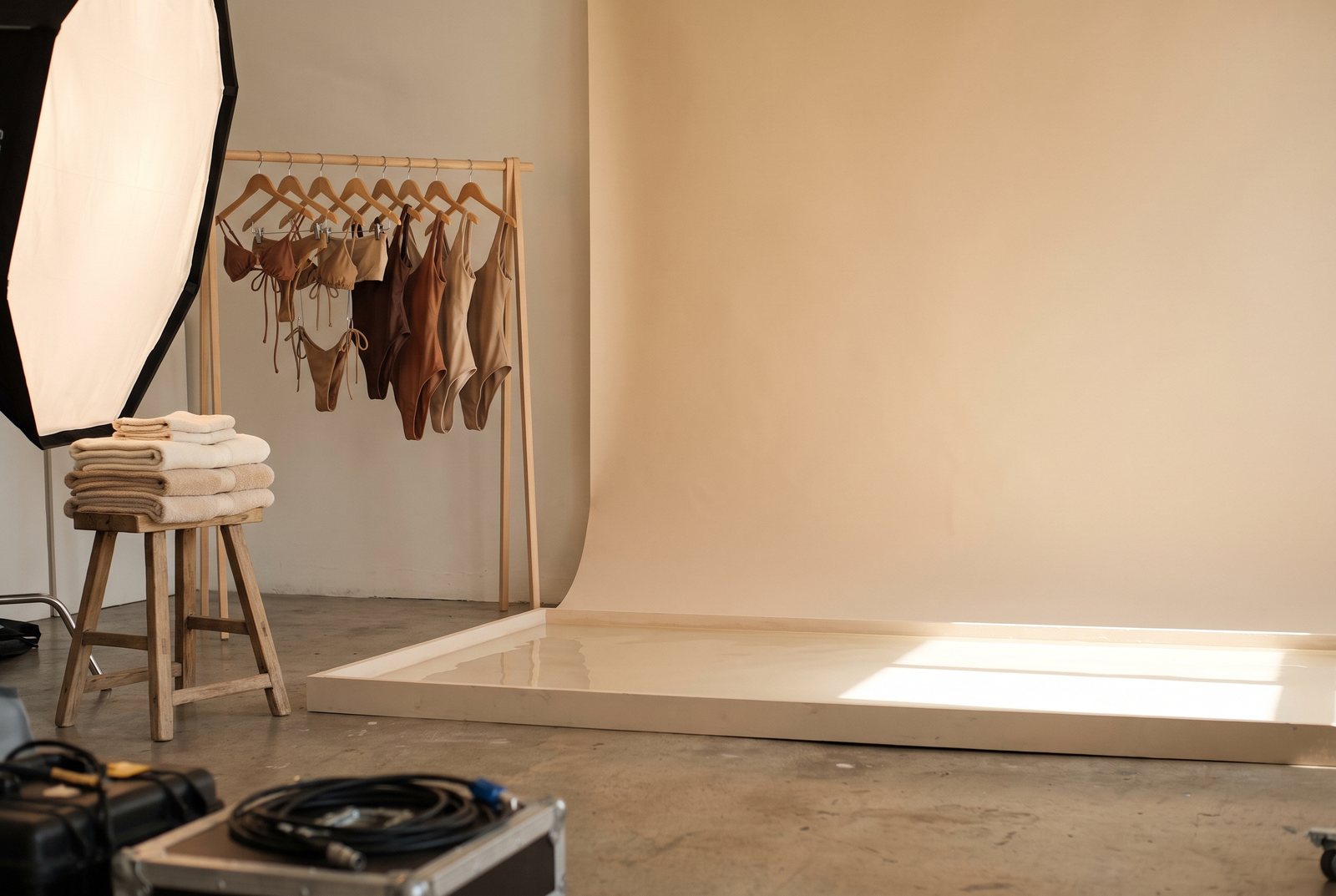
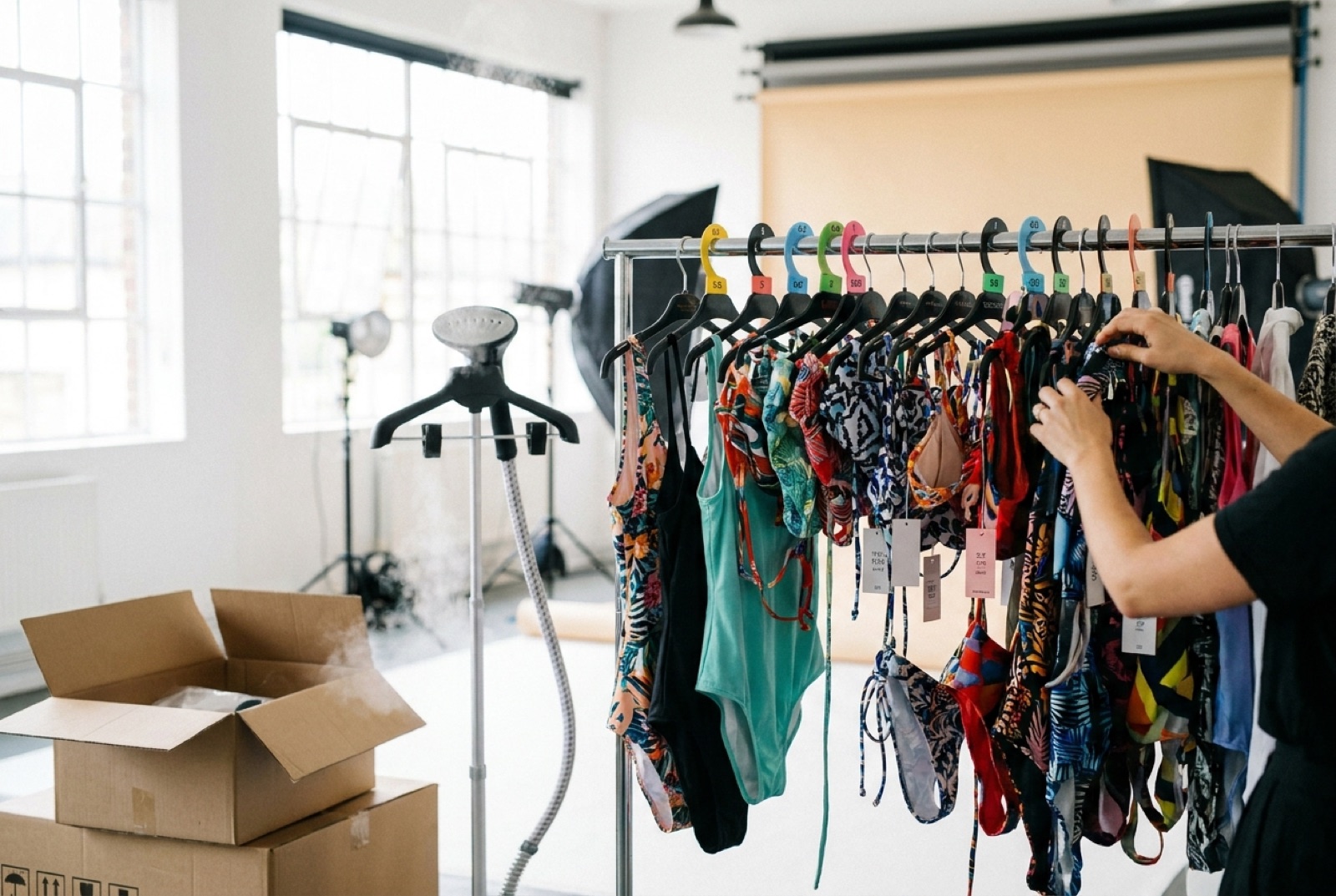
Let's kill the myth first. When most people picture a swimwear model, they picture a location shoot on a beach somewhere hot. Those jobs exist, but they are a tiny slice of the market. The bread and butter is a studio in London or Manchester, a rail of fifty swim styles, a steamer, and a shot list that needs finishing by 17:30.
The clients are the brands you already buy from. High-street retailers, supermarket clothing lines, online fashion giants, department stores and specialist swim and lingerie labels all shoot swim ranges every year, usually twice: a main summer drop and a smaller holiday-shop refresh. That volume is what makes swimwear a real, repeatable income stream for commercial models rather than a one-off.
One thing we say plainly to every applicant: TDA is a family-inclusive commercial agency. Swimwear on our books means product modelling for retailers. It is never glamour, never topless, never "implied" anything. If a brief drifts in that direction, we decline it, and you should too.
What are the requirements to be a swimwear model?
The honest requirements for UK swimwear modelling are good skin condition, genuine confidence in swimwear, reliability, and a body that matches one of the size ranges brands actually sell, which today means everything from a size 6 to a size 24 and beyond. There is no single "bikini body" gatekeeping list any more, because the customer buying the swimsuit does not have one either.
That said, some things matter more in swim than in any other clothing category, because there is nowhere for the camera to hide:
- Skin condition. Retouching budgets on e-comm are thin. Even, well-cared-for skin on the chest, back, shoulders and legs is worth more than abs. That includes managing tan lines: a strap-shaped tan mark can rule you out of a week of swim work.
- Grooming discipline. Swim briefs routinely specify no fresh fake tan, no new piercings, minimal visible bruising, and hair removal or grooming to the model's own standard but consistent across the shoot.
- Body confidence, for real. You will stand in swimwear under studio lights for six to eight hours in front of a working crew. Nerves read on camera. Confidence, not a specific dress size, is what clients rebook.
- Consistent measurements. Brands book you as a sample size, whether that sample is a 8, a 12 or an 18. Your job is to be the same size at the shoot as you were at the casting.
- Tattoos are usually fine. Most commercial clients accept them; some cover small ones in post or with makeup. Declare them accurately on your profile so nobody is surprised on set.
Height rules are looser than in fashion. E-commerce swim clients typically like women around 5'7" to 5'10" and men around 5'11" to 6'2" because samples are cut for those ranges, but curve boards, mature boards and campaign castings regularly go outside them. If an agency tells you swimwear is only for one body type, they are describing 2005, not the current market. Our guide to agency requirements covers the general signing criteria in more depth.
Do you need to be slim to model swimwear?
No. Plus-size and curve swimwear is one of the fastest-growing corners of the UK swim market, and brands need curve models in swim as urgently as they need straight-size ones. Every major high-street and online retailer now runs extended sizing on its swim range, and each of those size runs has to be shot on a model who genuinely wears that size.
This is a straightforward commercial fact, not a feel-good line. A retailer selling a bikini in sizes 6 to 24 cannot photograph it once on a size 8 and call the job done. Customers convert better when they see the garment on a body like theirs, so curve swim e-comm is now standing, repeat work. Our curve board exists for exactly this demand, and our post on curve modelling goes deeper on measurements and portfolio for that lane.
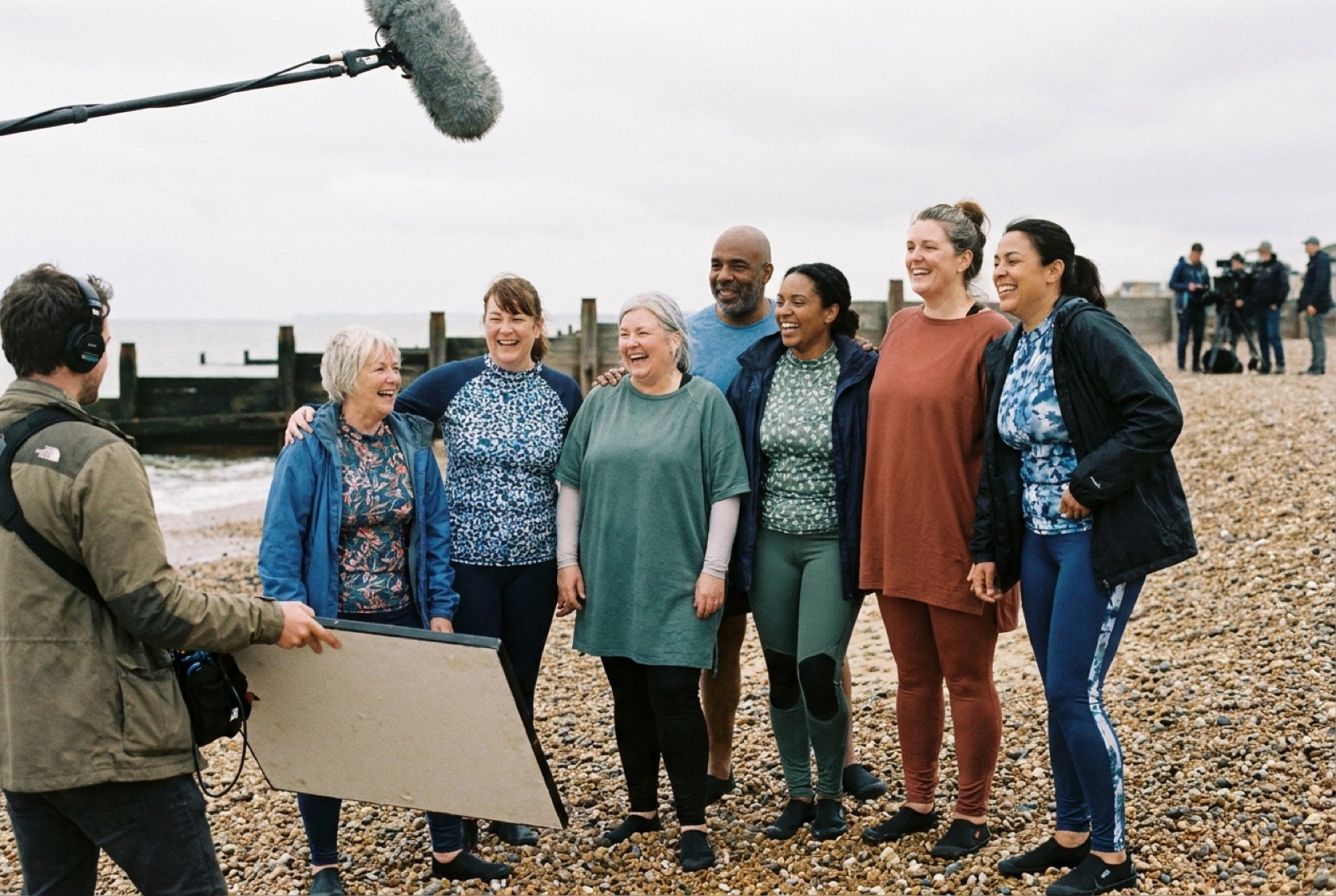
The same widening applies to age and background. Mature models in their 40s, 50s and beyond shoot swim for brands whose customers are on holiday at 55, not 22. Brands casting for the UK market increasingly want casts that look like the UK: Black, South Asian, East Asian, mixed-heritage and every other background, across sizes and ages. If you have been told you "don't fit" swimwear, the market has largely stopped agreeing.
How do swimwear e-commerce shoots actually work?
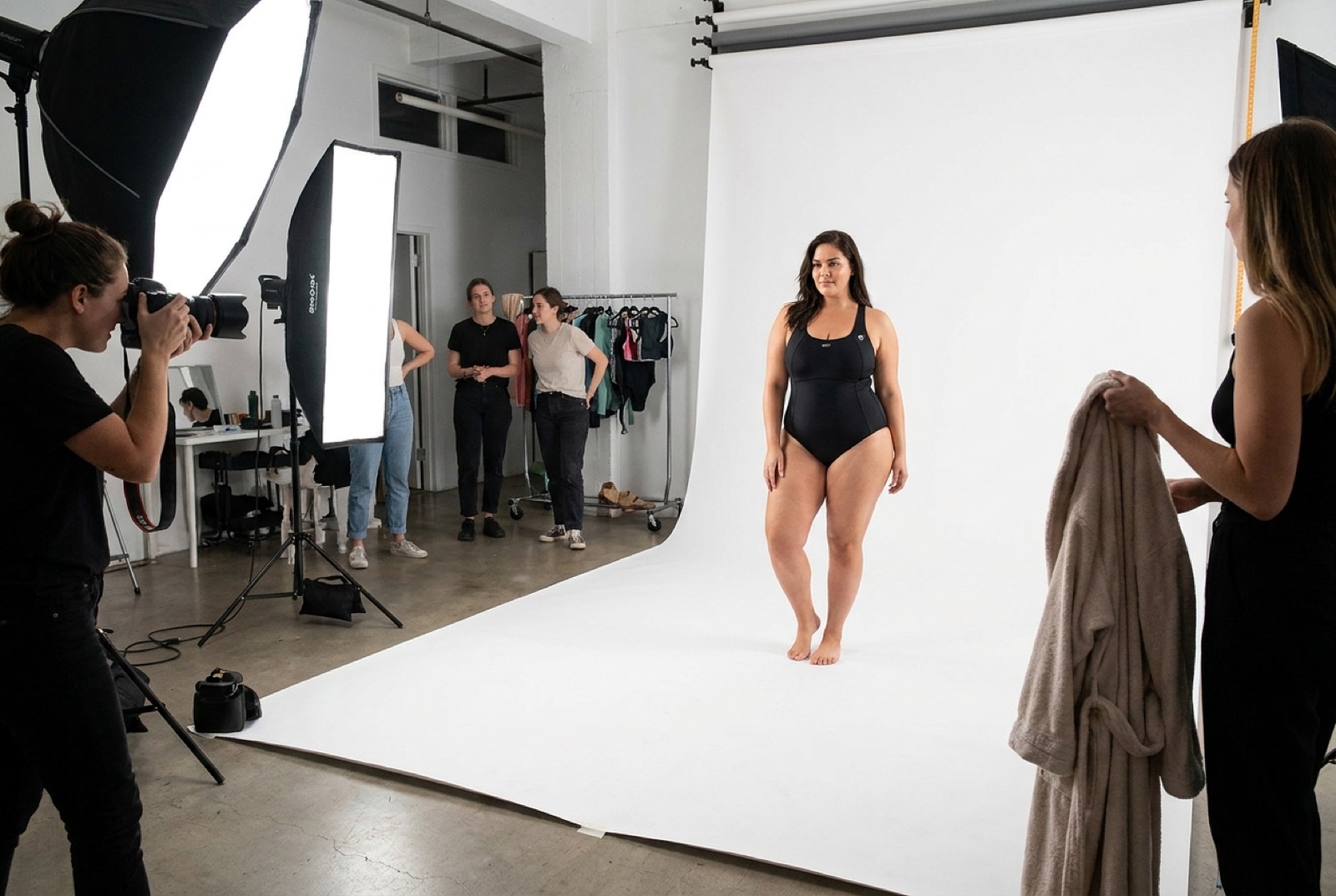
A typical UK swimwear e-commerce shoot is a full studio day, usually 09:00 to 17:30, in which one model shoots somewhere between 20 and 60 swim styles against a plain background, working through a fixed set of angles per garment. It is fast, repetitive, physical work, and it is where most of the money in swimwear modelling sits.
Here is the usual shape of the day:
- Call time and prep. You arrive with clean, product-free skin and hair as briefed. Hair and makeup is usually simple and natural; the garment is the star.
- The rail. A stylist has the day's swim styles steamed, tagged and hung in shoot order. Each style gets a few minutes on camera: front, back, three-quarter, a detail crop, sometimes a short video walk-in for the product page.
- Volume pace. You change in a private changing area, step on set, hit your angles, and change again. Forty changes in a day is normal. Clients rebook the models who keep that rhythm without losing energy in frame.
- Fit feedback. On some shoots you double as an informal fit check: the garment tech may note gaping, digging straps or sizing issues. Being articulate about fit makes you more valuable.
- Comfort standards. A professional set gives you a private changing space, keeps the studio warm, limits who is on set during swim looks, and never photographs you between looks. Hygiene liners stay in every garment you try.
On rates: UK e-commerce day rates for agency models commonly sit in the hundreds of pounds per day, with campaign and advertising work paying more once usage is added. Swim generally pays at or slightly above standard e-comm rates because of the skin-condition and confidence demands. We will not print a fake "swimwear models earn £X" number here; earnings depend on client, usage and how often you shoot. Our honest breakdown of UK model earnings covers the real ranges and how commission works.
What should a swimwear modelling portfolio include?
A swimwear portfolio needs clean, well-lit, unretouched swim or bodywear frames that show your shape, skin and proportions honestly: think simple one-piece or bikini shots in natural light or a plain studio, not heavily edited "sexy" imagery. Agencies and clients are checking whether you photograph well in minimal clothing and whether your digitals match your stated measurements. That is all.
If you are starting from zero, you do not need a paid photoshoot. You need:
- Swim digitals. Plain swimwear (a simple black or solid-colour bikini or one-piece for women, plain trunks for men), no makeup or minimal makeup, hair off the face, natural daylight, plain wall. Front, back, both profiles, and a smile.
- Standard digitals. The usual head-to-toe and portrait shots in fitted casual clothing, so the agency can compare.
- Accurate measurements. Bust or chest, waist, hips, height, dress or suit size, taken this month, not last year.
- Movement, optionally. A short phone video walking towards and away from camera tells an e-comm client most of what they need.
Once signed, an agency will build proper swim frames into your book through test shoots. The frames that book swim work are the unglamorous ones: relaxed posture, honest angles, garment clearly visible. Over-posed, over-filtered swimwear content from social media usually hurts more than it helps, because clients cannot tell what you actually look like.
Two practical portfolio notes from the booking desk. First, keep at least one recent swim or bodywear frame current at all times if you want swim castings; clients filter for it. Second, never let anyone talk you into shooting imagery you are uncomfortable with "for the book". A commercial swim portfolio contains nothing you could not show your family, because the end use is a retailer's product page.
How do you stay safe in swimwear modelling?
You stay safe by working through a reputable agency, insisting on written briefs with clear usage terms, and walking away from anyone who asks for payment, private "castings" or imagery beyond the agreed brief. Swimwear attracts more chancers than any other commercial category, so the filters below are not optional.
A legitimate swimwear brief always has:
- A named brand or client and a real production or casting contact you can verify.
- Written terms before the shoot: the fee, the shoot date, exactly what is being shot, and the usage (where the images will appear and for how long).
- A professional location: a studio or a produced location shoot, with other crew present. Never a private flat or hotel room.
- Chaperone rights. Under-18s must have a parent, guardian or licensed chaperone on set, no exceptions, and adults can reasonably ask who will be present.
And a legitimate brief never asks for:
- Money from you: no upfront fees, no "portfolio packages", no admin charges. Real agencies, TDA included, are free to join and earn commission only when you earn.
- Nudity, topless, "implied" or lingerie-plus content that was not in the original written brief. In commercial swim, it never is.
- Casting photos sent privately at night, "trial shoots" alone with one photographer, or castings arranged over DM with no agency involved.
- Pressure to decide on the spot. Real clients confirm through your agency and put it in writing.
The usage point deserves one more line, because it is where new models get burned financially rather than physically. If a contract says the client can use your swim images anywhere, forever, for a one-day fee, that is a bad deal, and an agency's job is to negotiate it. Unlimited usage should cost the client more; that is one of the main things you are paying commission for.
How do you get signed for swimwear work in the UK?
You get signed for swimwear work by applying to commercial and e-commerce agencies with honest digitals, including at least one swim or bodywear frame, and by making clear on your application that you are comfortable being put forward for swim briefs. Swimwear is rarely a standalone board; it is a category of work booked off an agency's main, curve, classic and men's boards.
The step-by-step, without fluff:
- Shoot fresh digitals as described above, including the swim set. Phone camera, daylight, plain wall. Do not pay anyone for these.
- Apply to commercial agencies online. TDA takes applications at our apply page, free, with a response once reviewed. Apply to several agencies; this is normal and expected.
- State swim comfort explicitly. Tell the agency you are open to swimwear and bodywear briefs. Bookers filter for this, and models who never said yes simply never get the castings.
- Be honest about measurements and tattoos. Swim exposes both. A surprise on set costs you the rebooking.
- Expect a meeting, not a promise. A real agency will meet you (in person or by video), talk through boards and expectations, and sign you with no fee. Anyone who guarantees you swim campaigns before you have shot a single test is selling something.
Once signed, the route into swim work is usually gradual: test shoots to build frames, then e-comm days for smaller brands, then the higher-volume retail clients once you have proven you can hold pace for forty changes. Models on our women's board and curve board who shoot swim regularly got there by being reliable on ordinary e-comm days first.
Frequently asked questions about swimwear modelling
How much do swimwear models earn in the UK?
Swimwear models in the UK earn standard commercial and e-commerce rates, typically a few hundred pounds per studio day before commission, with campaign and advertising jobs paying more once usage fees are added. Nobody can honestly quote you a fixed annual figure, because income depends on how often you shoot. Our post on model earnings breaks down the real ranges by job type.
What size do you have to be to model swimwear?
There is no single required size. UK brands shoot swim on models from roughly a size 6 through to a size 24 and beyond, because they sell those sizes and need each range shown on a body that wears it. What matters is that your measurements are accurate, current and stable, so the client can match you to their sample sizes.
Can you be a plus-size swimwear model?
Yes, and demand is strong. Extended-size swim ranges are now standard at major UK retailers, and every one of those product pages needs a curve model. If this is your lane, read our curve guide and apply with honest swim digitals.
Is swimwear modelling the same as glamour modelling?
No. Swimwear modelling as booked by commercial agencies is product modelling for retailers: showing a garment for sale, fully styled, on professional sets with clear usage terms. Glamour is a different industry with different clients and different content, and family-inclusive commercial agencies like TDA do not operate in it. Any "swimwear" brief that drifts towards topless or implied content is not a swimwear brief.
How old do you have to be to model swimwear?
Most swimwear briefs are for adults, 18 and over, and that is where the paid volume sits. Children's swimwear exists as a category and is shot under strict child-performance rules: licensing where required, a parent or licensed chaperone always on set, and limited hours. Mature models are actively booked for swim well into their 50s and 60s.
Do I need professional photos to apply for swimwear modelling?
No. Agencies assess swimwear applicants from phone digitals: plain swimwear, natural light, no filters, front, back and profiles. Paying for a professional swim shoot before you are signed is unnecessary, and any "agency" that requires you to buy one is a scam signal, not a step in the process.
What should I bring to a swimwear shoot?
Bring seam-free, skin-tone underwear, a dressing gown or cover-up for between looks, flip-flops or slides, basic grooming kit, water and snacks. Arrive with clean, moisturised skin free of fresh fake tan, oil or new tan lines, and hair prepped as the call sheet asks. The client supplies the swimwear; hygiene liners stay in at all times.
Can men do swimwear modelling?
Yes. Men's swim, trunks, boardshorts and beachwear is shot in the same e-commerce volume as womenswear every season, and the requirements are the same in kind: good skin condition, stable measurements, comfort on camera and reliability across a long changing-heavy day.
Ready to be put forward for swimwear work?
Swimwear modelling in the UK is honest, repeatable commercial work: studio days, high-street clients, real invoices. It rewards good skin, reliability and genuine confidence far more than any one body type, and the market now books swim across sizes, ages and backgrounds because that is who buys swimwear.
If that sounds like work you want, send us your digitals, including a simple swim set, through the TDA application. It is free, it takes ten minutes, and if you are right for our boards we will tell you exactly which swim and e-commerce clients we would put you in front of.