How to Spot a Modelling Scam in the UK — TDA
Blog · Booked
How to Spot a Modelling Scam in the UK — TDA
The Diversity Agency, London. Founded 2016. An independent UK modelling agency that signs models for free and earns only when they do. This is the honest guide to spotting a modelling scam before it costs you money.

Check any agency that approaches you before you reply.
How to spot a modelling scam in the UK
Every legitimate part of the modelling industry sits alongside a fringe of operators who make their money not from booking models, but from charging them. For every real agency reading applications and putting talent forward for paid work, there's a fake one selling overpriced photoshoots, "registration" packages and the promise of a career that never arrives.
The people these scams target are the people with the least protection: aspiring models, often young, often new to the industry, who've been told they have "the look" and want to believe it. The Diversity Agency reads thousands of applications a year, and we hear the same stories — someone paid £400 for a portfolio that led nowhere, someone signed a contract at a casting day they were pressured into, someone sent money to an "agency" that vanished. This guide exists so that doesn't happen to you.
The single rule that protects you from almost every modelling scam is simple, and the rest of this guide explains the variations around it: a real agency never asks you to pay to be signed.
Why these scams work
Modelling scams succeed because they target hope. Being told you could be a model is flattering, and the people running these operations know it. They use that flattery to lower your guard, then introduce a fee at the moment you're most invested in believing them. The urgency, the "limited spots," the in-house photographer — every element is built to move you from excited to paying before you've had time to think. Understanding that the emotion is part of the mechanism is the first defence. The opportunity might feel personal; the script is not.
The one red flag that matters most: paying to be signed
Money in the modelling industry flows one way. The client pays the agency, the agency takes its commission, and the model is paid the rest. At no point does a legitimate agency take money from the model in order to represent them.
So any agency, scout or "talent manager" that asks you to pay an upfront fee — to join, to register, to be added to the books, to build a portfolio, to attend training — is not operating as a real agency. The fee is the business model. Once you've paid, the incentive to actually find you work disappears, because they've already made their money.
This is the test that cuts through everything. Before you read another word about logos, contracts or follower counts, hold every approach against this one line: is money being asked of me before any work has happened? If yes, walk away.

No legitimate agency asks you to pay to be signed.
The most common modelling scams in the UK
Scams dress the upfront fee up in different costumes. Here are the ones we see most often.
The pay-to-portfolio scam
The most common by far. You're told you have potential, but first you "need" professional photos — and conveniently, the agency has an in-house or partner photographer who'll do them for £200–£600. The photos are presented as a condition of representation. Sometimes the images are fine; often they're mediocre. Either way, the agency has made its money and your career is no further forward. A real agency arranges test shoots after signing, coordinated with vetted photographers, and doesn't charge you for being represented.
The "registration" or "admin" fee
A smaller upfront charge — £20 to £100 — framed as an administrative cost to "process" your application or "activate" your profile. It sounds reasonable precisely because it's small. It isn't. No real agency charges to read an application or list a model.
Fake scouting on social media
A direct message from an account claiming to be a scout or agency: "We love your look, you'd be perfect for our brand work." The account has few followers, no verifiable agency identity, and a link to a sign-up page or a request to move the chat to WhatsApp. Real scouting does happen on Instagram and TikTok, but a legitimate scout points you to a real agency with a real website, never asks for money, and won't push you off-platform to "discuss opportunities."
Casting-day pressure
You're invited to an open casting or "audition," and on the day you're told you've been selected — but you must sign now, and pay now, before you leave. The urgency is the tactic. It's designed to stop you taking the contract home, reading it, or checking the company exists. No genuine offer evaporates if you take a day to think about it.
The fake agency with no identity
A slick website, a borrowed-looking logo, stock photos of "models," and nothing you can verify: no Companies House registration, no real client list, no address, no current campaign work. The whole front exists to take portfolio or registration fees from as many applicants as possible before complaints catch up with it.
Advance-fee and "we found you a job" scams
A more aggressive version: you're told you've been booked for a paid job — abroad, or for a big brand — but you need to pay first for a visa, travel, "insurance," or a booking deposit, to be reimbursed later. The job doesn't exist. The money is gone the moment you send it.
Modelling schools posing as agencies
An operation that sells "modelling courses" or "training" while implying that completing the course leads to representation or work. Some modelling courses are honest about being education. The scam is the ones that blur the line — selling training as a route to a career the training has no power to deliver.
Deposit and image requests
Less about fees, more about data and safety: a fake booking that asks for your bank details "to pay you," a request for a deposit you'll "get back," or a request for explicit images framed as "test shots." Treat any of these as an immediate stop.
The red-flag checklist
If an agency, scout or casting does any of the following, stop and check before you go further:
- Asks for any upfront fee — joining, registration, portfolio, training, admin.
- Requires you to use and pay their specific photographer to be signed.
- Pressures you to sign or pay on the spot, before you can read the contract.
- Promises "guaranteed work" or guaranteed earnings.
- Approaches from a social account with no verifiable agency identity.
- Pushes the conversation to WhatsApp or DMs to "discuss opportunities."
- Has no Companies House registration, no real address, no verifiable clients.
- Asks for a deposit, your bank details "to pay you," or money for visas or travel.
- Requests explicit or inappropriate images, especially early on.
If money flows from the model to the agency before any work has happened, walk away.
The green flags: what a real agency looks like
Knowing the warning signs is half of it. Here's the other half — what a legitimate UK agency actually does:
- Free to apply and free to be signed. The agency earns commission on the work it books for you, taken from your bookings, never upfront.
- A transparent commission structure, explained clearly before you sign.
- A real, verifiable client list and current campaign work.
- Test shoots arranged by the agency after signing, not sold to you as a condition.
- A clear written contract you can take away and read in full.
- A Companies House registration, a real address, and an active presence with genuine work on it.
- No pressure. A real agency wants the right models and is happy for you to take your time.

A real agency explains how it works — and never rushes you.
The grey areas: costs that are genuinely normal
To be fair, not every cost in modelling is a scam, and it helps to know the difference so you don't reject a real agency out of caution. A few things are normal — but notice that none of them is a payment to the agency in order to be signed:
- Your own travel to castings and bookings. You cover it, and it's usually reimbursed once a booking confirms.
- A small wardrobe kit — plain fitted basics, neutral underwear, simple shoes — that any working model keeps on hand. A one-off, low cost, bought by you and kept by you.
- Agency commission, taken as a percentage of the day rate after you've been paid for a job — not before, and never as a fee to join.
The line is always the same: money you spend on your own working kit and travel is normal; money handed to an agency before any work exists is not.
How to check an agency is legitimate
Five minutes of checking protects you from almost every scam. Before you sign or pay anything:
1. Search Companies House
Every real UK agency is a registered company. Search the agency name on the free Companies House register. If there's no registration, or the company was set up last month with no history, treat that as a serious warning.
2. Look at the client list and campaign work
A real agency can show you who it works with. Cross-check a few named clients or campaigns. If the "client list" is vague, generic or unverifiable, be cautious.
3. Check the social media properly
Not just the follower count — the substance. Is there current work? Are the models tagged real, working models? Does the engagement look genuine? A polished grid with no verifiable people behind it is a red flag.
4. Read the contract — all of it
Take it away. Read every clause. Look for hidden fees, vague terms, anything that commits you to paying for services. If you don't understand a clause, ask, and get the answer in writing. A real agency will happily explain.
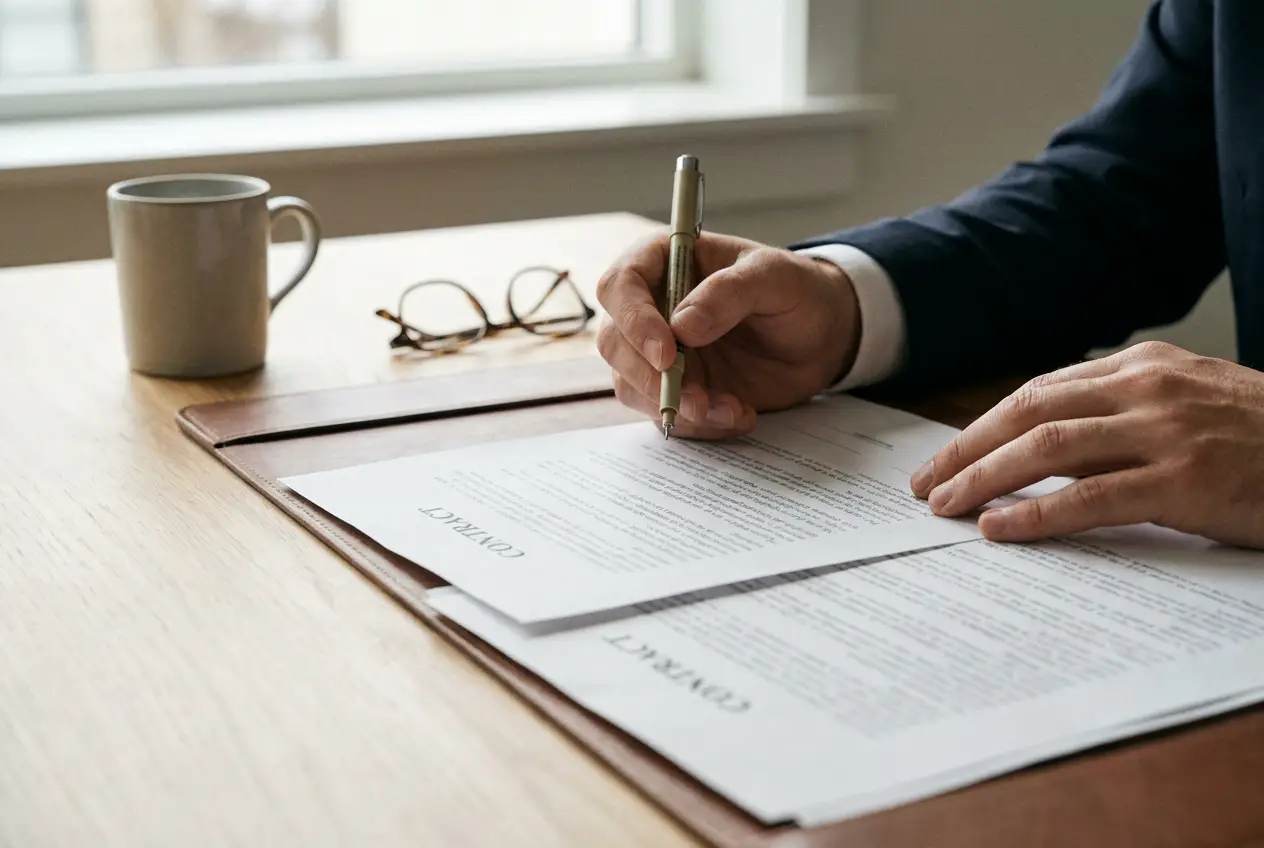
Take any contract away and read it in full before signing.
5. Never let urgency rush you
The single most effective scam tactic is time pressure. Remove it. Any offer worth taking is still there tomorrow. If an agency won't let you think for 24 hours, that tells you what you need to know.
What to do if you've already been scammed
If you've paid a fee or sent money and realised it was a scam, act quickly:
- Contact your bank immediately. If you paid by card or transfer recently, they may be able to stop or recover the payment.
- Report it to Action Fraud (the UK's national fraud reporting centre) and keep every message, receipt and screenshot as evidence.
- Warn others. Leave honest reviews and report the account or company on the platform you found it. It helps the next person.
- Don't be embarrassed. These scams are designed by people who do this for a living. Being targeted isn't a failure of judgement — staying quiet just lets them continue.
How The Diversity Agency works — by contrast
So the difference is clear: TDA is free to apply to and free to join. We earn a commission on the paid work we book for our models, taken from those bookings — never from the model in advance. New signings go through a proper onboarding, including test shoots we arrange and coordinate, and every model has a written agreement they can read in full before signing.
We represent 300+ models across our boards — Women, Men, Curve, Modest, Classic, Family, Non-binary and parts — and we read every application that comes in. If you'd like to apply, it's free: thediversity.agency/apply.
The right agency works for you, not the other way round.
Related reading: How to apply to a UK model agency · What modelling agencies look for · How much do UK models earn?.
Frequently asked
Do real modelling agencies ever charge a fee?
No legitimate agency charges you to be signed or represented. Some agencies deduct small, agreed costs from your earnings (for example, specific production costs tied to a job), but those come out of money you've earned — never as an upfront payment to join.
Is it normal to pay for professional photos?
Not to get signed. You apply with free phone-camera digitals. After signing, a real agency arranges test shoots to build your portfolio. If you're asked to pay a specific photographer as a condition of representation, that's the pay-to-portfolio scam.
Are scouting DMs on Instagram ever real?
Sometimes — agencies do scout on social media. But a real scout points you to a legitimate agency with a verifiable website and never asks for money or pushes you off-platform. Check the agency the same way you'd check any other.
I was asked to pay a small "registration" fee. Is that ok?
No. The size doesn't matter. A real agency doesn't charge to register, list or process an applicant.
An agency wants me to sign today. Should I?
No genuine offer disappears if you take a day. Take the contract away, read it, check the company, and sign when you're sure — not under pressure.
How do I check if a UK agency is real?
Search Companies House for its registration, verify its client list and current work, read the full contract, and confirm it never asks you for money upfront. If all four check out, it's likely legitimate.
The modelling industry has real, paid opportunity in it — and a fringe that exists to take money from people chasing it. Learn the one rule, check before you sign, and you'll spot a scam long before it costs you anything.

You might like
View all →


